How to Choose the Right Wire Box in 2026?

Choosing the right wire box in 2026 is no longer a simple matter of matching size and price. A wire box must protect connections, control heat, resist moisture, and leave enough room for future maintenance. Behind a wall, a cramped box can turn a routine inspection into a difficult repair.

Market evidence supports this wider view. Grand View Research reports continued growth in the global electrical enclosures market, driven by industrial automation, renewable energy, and smarter building systems. MarketsandMarkets also forecasts steady expansion through 2028, although published estimates differ by scope and product definition. That difference matters. A report covering industrial enclosures may not reflect residential wire box demand accurately.

Mike Holt, a respected electrical-code educator, explains the practical purpose clearly: “The purpose of a junction box is to protect the connections and provide access for maintenance.” That principle should guide every purchase. Look at the installation environment first. A dusty workshop may need stronger sealing. A humid utility room may require corrosion-resistant materials. A crowded ceiling space needs generous internal capacity and accessible covers.

Small details matter. Check conductor count, connector volume, cable entry points, grounding provisions, and cover strength. Do not trust appearance alone. A polished plastic box may be unsuitable near heat, while a metal box may require careful grounding and bonding.

The difficult part is predicting tomorrow’s needs. Installers often choose the smallest acceptable option. That saves a little today, but it can create congestion later. This guide compares materials, ratings, dimensions, installation methods, and certification considerations, while acknowledging one uncomfortable truth: product labels are not always as clear as they should be.
How to Choose the Right Wire Box in 2026?

What a Wire Box Is and Why It Matters in 2026

How to Choose the Right Wire Box in 2026?

What a Wire Box Is and Why It Matters in 2026

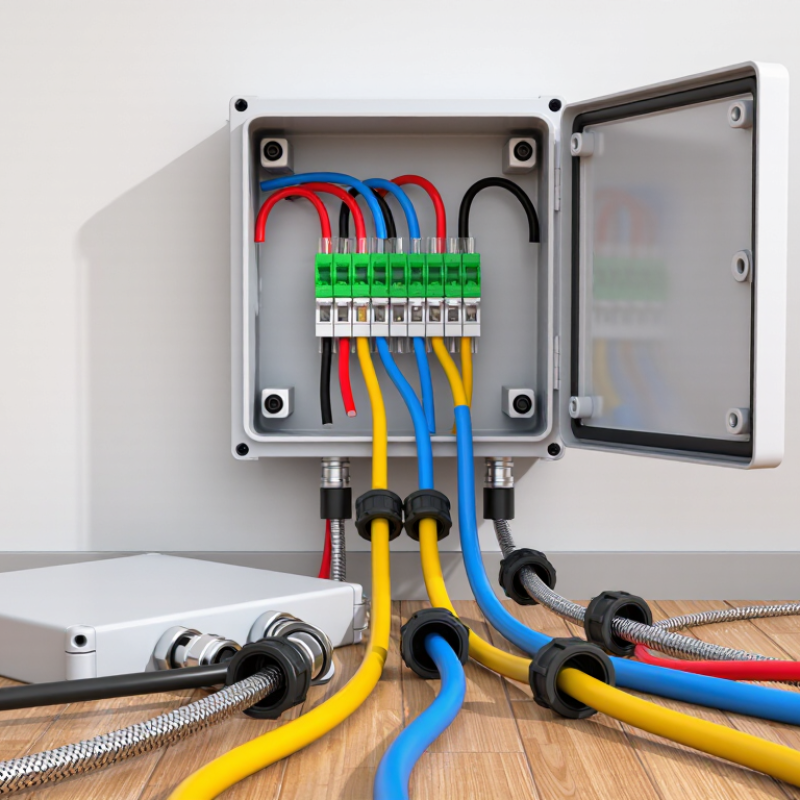
A wire box is an enclosure that protects electrical connections, terminals, and cable entries. It keeps conductors organized and reduces contact with moisture, dust, impact, and accidental touching. In 2026, this simple enclosure supports increasingly complex homes and workplaces. Smart controls, energy storage, solar equipment, and networked devices all create more wiring points.

The correct box starts with its location. An indoor box may need basic protection, while an outdoor installation requires weather resistance and secure cable glands. Check the box size carefully. Crowded wires can overheat, bend sharply, or become difficult to inspect. Leave practical working space. Do not judge capacity by appearance alone.

Material also matters. Plastic resists corrosion and suits many light-duty applications. Metal can provide stronger impact protection and better grounding continuity when installed correctly. Always verify temperature ratings, ingress protection, mounting strength, and compatibility with the cable type. Local electrical requirements and certified components deserve attention. A qualified electrician should review permanent installations, especially where high current or energy storage is involved.

I have seen neat-looking boxes fail because their covers warped or their entries leaked. Small details matter. I also think “future-proof” sizing is easy to exaggerate. An oversized box may waste space, while a tight box creates new problems later. Choose enough room for safe routing, inspection, and one realistic upgrade. No box is perfect. Good selection is careful, measured, and slightly conservative.

How to Match the Box Type to Your Wiring Project

How to Choose the Right Wire Box in 2026?

Matching the box to the wiring project starts with location, conductor count, and physical load. For a standard indoor branch circuit, a metal box suits exposed wiring and offers a dependable grounding path. A nonmetallic box can work well with sheathed cable in dry, protected walls. Do not choose by appearance alone. The box must provide enough internal volume for every conductor, clamp, grounding wire, and device.

NFPA’s Home Structure Fires report found electrical distribution and lighting equipment involved in 57% of home fires linked to electrical failure or malfunction. That figure makes careful box selection more than a neat finishing detail.

For ceiling fixtures, use a box specifically rated for the fixture’s weight and movement. For remodeling, an old-work box grips the finished wall, while a new-work box anchors to framing before drywall. Junction boxes need accessible covers; burying one behind a fixed surface creates a serious maintenance problem.

In damp areas, select an enclosure approved for wet or corrosive conditions. The U.S. Fire Administration estimated about 26,100 residential electrical fires annually from 2014 to 2016. Small errors matter. I have seen installers calculate conductor volume correctly, then forget the grounding pigtail. That shortcut can fail. Match the box to the cable system, mounting surface, environment, and future access, then verify the installation against the current electrical code.

How to Choose the Right Material and Protection Rating

How to Choose the Right Wire Box in 2026?

Material choice starts with the installation environment, not the purchase price. A 2024 MarketsandMarkets report estimates the electrical enclosure market will grow from about USD 6.6 billion in 2023 to USD 9.1 billion by 2028. That growth reflects rising demand for safer, better-protected wiring systems. Steel suits indoor industrial spaces and offers strong impact resistance. Stainless steel performs better near moisture, salt, and cleaning chemicals. Polycarbonate is lighter and resists corrosion, but heat and impact limits need checking. I have seen plastic boxes crack after repeated exposure to sunlight. That detail is easy to miss.

Protection ratings must match real conditions. IEC 60529 defines IP ratings for dust and water protection. An IP65 box is dust-tight and resists water jets. It is not designed for water immersion. NEMA 250 provides additional enclosure guidance for North American applications, including corrosion and hazardous outdoor conditions. Check cable glands, hinges, and gasket compression too. A high rating fails when one entry point remains poorly sealed. This is where many specifications become too optimistic.

Tips: List dust, rain, oil, heat, impact, and cleaning chemicals before choosing materials. Select the next suitable rating when conditions may change. Verify operating temperature, wall thickness, and mounting space. Do not assume stainless steel always wins. In some projects, it adds cost without improving protection. A small trial installation can reveal condensation, cable strain, or access problems before full deployment.

How to Choose the Right Wire Box in 2026? - How to Choose the Right Material and Protection Rating

Compare common wire box materials and protection levels by installation environment, mechanical demands, corrosion exposure, and ingress protection requirements.

Wire Box Material Key Advantages Main Limitations Recommended Environments Typical Protection Options Temperature and UV Considerations Best Selection Use Case
ABS Plastic Lightweight, easy to machine, electrically insulating, and generally economical. Lower impact and heat resistance than many engineering plastics; standard grades may degrade under prolonged outdoor UV exposure. Indoor control cabinets, commercial buildings, dry utility areas, and light industrial installations. Commonly available in IP54 to IP65 designs when the cover, gasket, and cable entries are correctly engineered. Use UV-stabilized grades for outdoor service. Confirm the manufacturer’s continuous-use temperature range before installation near heat sources. Indoor wiring protection where low weight, insulation, and cost control are priorities.
Polycarbonate High impact resistance, good dimensional stability, electrical insulation, and broad design flexibility. Can be scratched; some chemicals and prolonged unprotected UV exposure may affect performance depending on the grade. Outdoor electrical equipment, industrial automation, transport infrastructure, and areas exposed to accidental impact. Often specified in IP65, IP66, or higher-rated configurations, subject to enclosure construction and testing. Choose a UV-resistant outdoor grade where sunlight is continuous. Verify performance at both low and high operating temperatures. Outdoor or industrial applications requiring impact resistance without the electrical conductivity of metal.
Glass-Reinforced Polyester (GRP/FRP) Strong corrosion resistance, good mechanical strength, and suitable for harsh chemical or marine atmospheres. Heavier and less recyclable than many thermoplastics; machining can generate reinforcing-fiber dust. Wastewater treatment, coastal facilities, chemical processing areas, and corrosive industrial locations. Commonly used in IP65 to IP66 enclosures; higher ratings depend on the complete enclosure assembly. Generally suitable for outdoor exposure, but resin type, UV stabilizers, and temperature limits must be checked for the specific product. Corrosive environments where painted or plated metal may require frequent maintenance.
Powder-Coated Carbon Steel High rigidity, good impact resistance, broad availability, and easy integration with mounting hardware. Coating damage can expose the underlying steel to corrosion; not ideal for persistent moisture or aggressive chemicals without additional protection. Indoor industrial panels, machinery, workshops, and protected utility rooms. Commonly designed for IP54 to IP66, depending on seams, door or cover construction, gasket quality, and cable glands. Outdoor use requires suitable coating, drainage, sealing, and corrosion protection. Avoid untreated cut edges and damaged surfaces. General industrial installations needing rigidity and economical mechanical protection.
Stainless Steel 304 High mechanical strength, good general corrosion resistance, hygienic surface, and durable outdoor performance. Higher cost and weight than plastic; may be vulnerable to chloride-related corrosion in severe marine or chemical environments. Food-processing areas, commercial outdoor installations, clean utility spaces, and moderately corrosive industrial sites. Frequently specified in IP65, IP66, or IP67 configurations when properly gasketed and assembled. Suitable for many outdoor applications. Inspect for crevice corrosion and avoid contamination from carbon-steel fabrication tools. Installations requiring a durable, cleanable metal enclosure with moderate corrosion resistance.
Stainless Steel 316/316L Improved resistance to chlorides and many corrosive chemicals compared with 304 stainless steel. Higher material cost; still not universally corrosion-proof, especially in highly aggressive chemicals or stagnant crevices. Marine locations, coastal infrastructure, chemical plants, pharmaceutical facilities, and washdown areas. Commonly selected with IP66 or IP67 designs; IP rating still depends on the complete enclosure and entry system. Well suited to demanding outdoor and washdown conditions. Confirm compatibility with process chemicals, cleaning agents, and temperature cycles. Severe corrosion exposure where long service life and reduced maintenance justify the higher initial cost.
Aluminum Lightweight, rigid, thermally conductive, and naturally resistant to atmospheric corrosion when properly finished. Can be affected by galvanic corrosion when joined directly to dissimilar metals; may require coating in aggressive environments. Outdoor control equipment, transportation systems, machinery, and applications where weight reduction matters. Commonly available in IP65 to IP66 designs; sealing of joints and cable entries is critical. Suitable for many outdoor applications, but verify coating durability, thermal expansion, and resistance to the local atmosphere. Projects needing a strong metal enclosure with lower weight and good heat dissipation.

Selection note: IP ratings are defined by IEC 60529. The first digit indicates protection against solids and dust, while the second digit indicates protection against water. The final rating applies to the complete assembled wire box, including its cover, gasket, fasteners, cable glands, plugs, and mounting interfaces—not to the material alone.

How to Calculate Capacity, Dimensions, and Installation Space

Choosing the Right Wire Box in 2026: Capacity, Dimensions, and Installation Space

Start with the conductors, connectors, and accessories the box must hold. Count every wire entering, leaving, or passing through the enclosure. Apply the applicable box-fill rules for your installation area. Required capacity equals the total conductor allowances, including grounding and internal fittings. Use the box’s marked volume, not its outside size. I once measured only the length and width. That mistake left too little working room.

Measure the box depth against the longest connector and wire bend. Add space for insulation movement and tool access. A compact box may fit on paper but fail during installation. Leave clearance around the box for covers, cable entries, and future inspection. Check wall thickness, mounting position, and nearby pipes before cutting. A qualified electrician should verify the final calculation and local requirements. Real conditions can defeat a perfect worksheet.

Tips: Sketch the box and label each cable path. Keep a small capacity margin instead of filling the enclosure completely. Confirm the cover fits without pressure. Take photos before closing the wall. Recheck your count. Mistakes happen. Use manufacturer volume markings and installation instructions as evidence, not guesses. When uncertain, choose a larger compliant enclosure rather than forcing crowded bends or stressed connections.

How to Verify Safety Standards, Durability, and Overall Value

How to Choose the Right Wire Box in 2026?

How to Verify Safety Standards, Durability, and Overall Value

A reliable wire box should protect conductors from impact, moisture, heat, and accidental contact. Start by checking recognized safety markings and test documentation. IEC 60529 defines IP ratings for protection against dust and water. NEMA 250 provides enclosure requirements for different environmental conditions. Do not accept vague claims such as “weatherproof.” Ask for the exact rating and test scope.

Safety deserves careful attention. The NFPA Home Structure Fires report recorded an annual average of 23,700 home fires involving electrical distribution and lighting equipment from 2015 to 2019. These fires caused about 290 deaths, 870 injuries, and 1.1 billion dollars in direct property damage. A strong enclosure cannot prevent every failure. It can reduce exposure to moisture, loose connections, and physical damage. Check wall thickness, hinge strength, gasket quality, grounding provisions, and temperature limits. I have found that small details often reveal weak manufacturing.

Tips: Match the box to its location, not only its price. For dusty workshops, verify the dust-protection level. For outdoor use, inspect the seal after repeated opening. Confirm cable-entry fittings separately. Review test reports, installation instructions, and warranty terms. A low-cost box may become expensive after corrosion or rewiring. I still think buyers sometimes overvalue appearance. The cleanest enclosure is not always the safest one.

How to Choose the Right Wire Box in 2026?

Evaluation priorities for verifying safety standards, durability, installation suitability, and overall value

Safety and compliance receive the highest weighting because a wire box should be supported by recognizable certification or test documentation, such as applicable enclosure, wiring-accessory, or ingress-protection standards. Durability covers material strength, corrosion resistance, temperature performance, and protection against dust or moisture. Before purchase, compare the documentation, physical specifications, installation compatibility, and total ownership cost rather than relying on price alone.