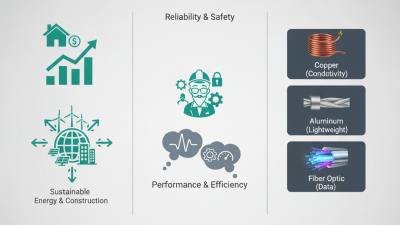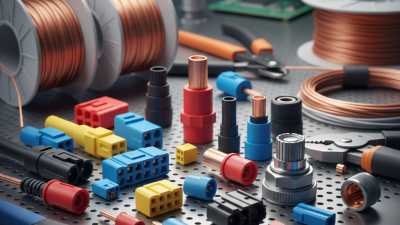
Finding China’s top wire cable manufacturers requires more than comparing prices or browsing polished websites. The right supplier must prove consistent production, material control, testing discipline, and dependable communication. A factory may display modern machines, yet its real capability appears in ordinary details: copper rod storage, extrusion-line cleanliness, batch labels, and test records.
Joseph M. Juran, a respected manufacturing-quality authority, defined quality as “fitness for use.” This principle applies directly to every wire cable wire project. A cable can look excellent and still fail under heat, bending, moisture, or continuous electrical load. Therefore, buyers should examine conductor composition, insulation materials, voltage ratings, tensile strength, flame performance, and dimensional tolerances. Ask for recent inspection reports. Request production samples. Compare them with the approved specification.
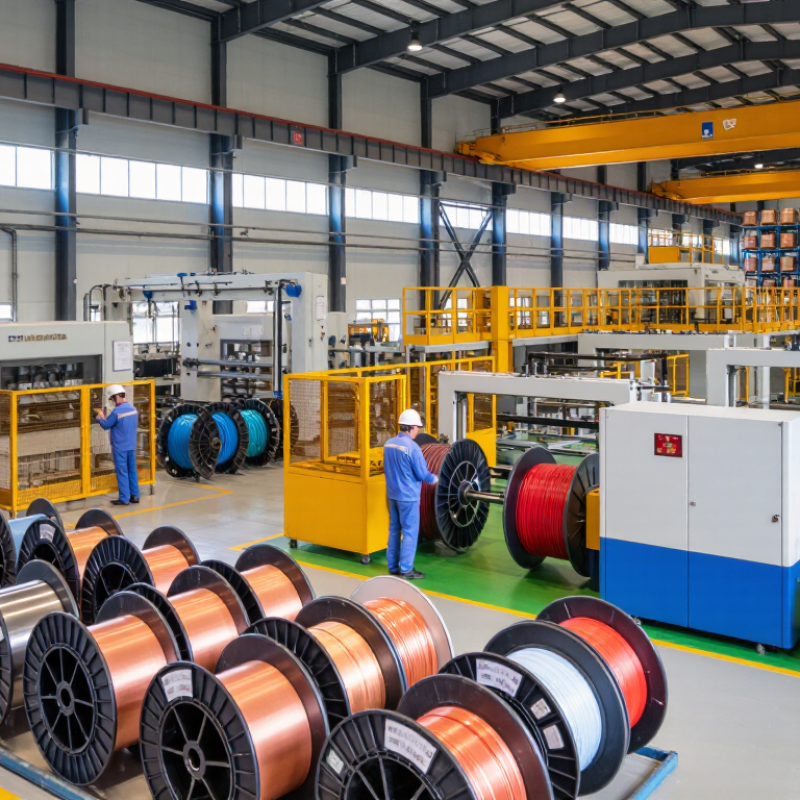
A credible Chinese manufacturer should explain its quality system without vague promises. Look for traceable raw materials, calibrated testing equipment, documented corrective actions, and experienced technical staff. Factory audits can reveal more than sales presentations. Check whether workers follow clear procedures. Observe how finished coils are packed and labeled. Small details matter.
Experience also teaches humility. A supplier with many years of export history is not automatically suitable. Some factories specialize in building wire, while others perform better with control, automotive, solar, or industrial cables. Certifications deserve verification, not blind trust. Independent laboratory testing may be worthwhile before a large order.
This guide outlines a practical way to compare manufacturers, confirm technical claims, and reduce procurement risk. The goal is not to find the cheapest cable. It is to find a partner whose wire cable wire consistently performs in the real installation environment.
How to Find China Top Wire Cable Manufacturers?
Choosing a capable Chinese wire and cable manufacturer starts with a clear technical requirement. Vague requests often produce mismatched samples, delays, and unnecessary revisions.
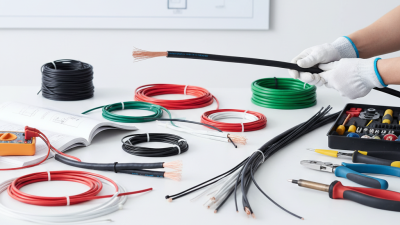
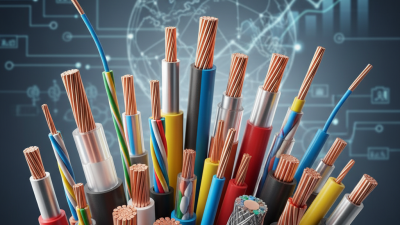
Define the conductor material, cross-sectional area, voltage rating, insulation type, and cable structure. State whether you need copper, aluminum, flexible, shielded, armored, or fire-resistant construction. Be precise. Include the intended application, installation method, operating temperature, bending radius, and expected service life. A cable for factory machinery faces different stress from one installed underground. Add required lengths, packaging details, color codes, and acceptable dimensional tolerances. Small details matter.
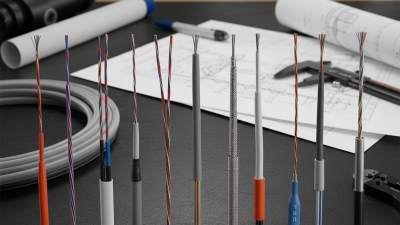
Ask potential manufacturers for drawings, material certificates, routine test records, and production photographs. Request a sample made with the same materials and process as your planned order. Check conductor resistance, insulation thickness, tensile strength, and flame performance through suitable testing methods. Applicable national or international standards should be identified before production. Do not rely on a generic compliance statement. It may hide important differences.
In practical sourcing, buyers sometimes focus too heavily on price. I have seen low-cost samples fail after repeated bending. Yet, expensive specifications can also exceed the real need. Review the working environment honestly. Leave room for reasonable tolerances, but not unclear wording. A written requirement sheet helps manufacturers quote accurately and exposes questions early.
China’s wire and cable industry is concentrated in several manufacturing regions. Jiangsu is a major hub, especially around Yixing and Suzhou, where factories produce power cables, control cables, and industrial wiring. Zhejiang, including Ningbo and Hangzhou, has strong capacity in building wire, flexible cable, and export-oriented products. Guangdong supports electronics, appliance, and low-voltage cable supply chains, with dense component networks near the Pearl River Delta.
An industry view confirms this scale. The International Trade Centre’s Trade Map data for 2023 places China among the leading global exporters under HS 8544, covering insulated wire, cable, and optical-fibre cable. China’s National Bureau of Statistics also reported continued growth in electrical machinery manufacturing output during 2023, although this category is broader than wire and cable. The figures are useful, but not perfectly specific.
Anhui’s Wuwei area and Shandong also deserve attention. Wuwei is known for large-volume power cable production, while Shandong offers access to heavy industry and infrastructure projects. Regional labels can mislead. A factory near a famous cluster may still outsource copper processing or final testing. That assumption can fail.
When identifying China’s top manufacturers, compare the region with the actual plant address. Check production lines, conductor-testing equipment, voltage-test records, and recent export documentation. Request samples from the same facility named in the contract. A strong supplier should explain conductor purity, insulation material, applicable IEC or GB standards, and batch traceability without vague answers.
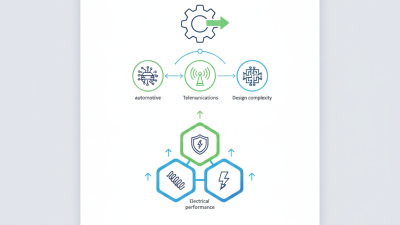
China’s wire and cable industry is concentrated in several regional manufacturing clusters. The index below compares documented regional strengths in production scale, product diversity, industrial supply chains, and export connectivity. It is a sourcing guide rather than company market-share data.
Key sourcing insight: Jiangsu and Zhejiang are widely recognized for broad cable manufacturing ecosystems. Guangdong is especially strong in electronics, data and communication applications, while Anhui, Shandong and Hubei are important bases for power, industrial and optical-fiber products.
A reliable China wire cable manufacturer must prove more than a polished website.
Check its business license, factory address, ISO 9001 certificate, and certificate scope. The ISO Survey 2022 recorded about 1.26 million valid ISO 9001 certificates worldwide. That number shows quality certification is common, not automatically meaningful. Confirm the certificate holder matches the factory. Check its validity with the issuing body.
Production evidence matters more. Request recent test reports for conductor resistance, insulation thickness, tensile strength, and voltage withstand. Match them with applicable standards, such as IEC 60228 and IEC 60502-1. Ask for batch numbers, raw material records, and calibration dates. During a factory visit, observe copper or aluminum stranding, insulation extrusion, spark testing, and final packing. A working line should show operators, inspection points, and recorded results. Empty workshops are a warning.
Capacity claims need measurable proof.
Ask for monthly output by cable type, line speed, shift patterns, and current order loading.
Demand is rising, but a large market does not guarantee stable supply. Require a sample production run before signing a large order. Test the sample independently. No checklist is perfect. I would not rely on factory photos, copied certificates, or one successful sample. Quality can drift between batches, especially when material prices change. Record nonconformities and require corrective-action evidence.
Quality should be checked before price. IEC 60228 defines conductor resistance and cross-sectional classes for power cables. Ask manufacturers for recent test reports, not only certificates. A credible factory can provide conductor resistance, insulation thickness, tensile strength, and voltage-test results. Verify samples with an independent laboratory when the cable serves critical equipment. Small differences matter. A thinner insulation layer may reduce cost, but it can increase failure risk.
Standards reveal manufacturing discipline. For low-voltage power cables, compare compliance with IEC 60502-1, RoHS requirements, and ISO 9001 quality procedures. Check whether certificates cover the exact cable structure and voltage rating. Certificates can be outdated. This is where buyers often become careless. The International Energy Agency’s 2023 grid report says annual grid investment must rise above 600 billion dollars by 2030. That pressure may increase demand, but it does not justify accepting weak documentation.
Pricing requires a complete comparison. Request copper weight, insulation material, testing fees, packaging, tooling, and delivery terms in one quotation. Copper is usually the largest cost variable, so link the offer to a recognized market reference and record the quotation date. Lead times should separate raw-material purchasing, production, testing, and shipping. A supplier promising seven days may exclude testing or export preparation. Ask for a production schedule with inspection points, especially for customized cable sizes. Mistakes here are expensive.
A reliable evaluation starts with physical samples, not polished quotations. Request identical lengths, conductor sizes, insulation materials, and test conditions from each supplier. Check surface smoothness, printing accuracy, flexibility, stripping quality, and connector fit. Record results in a comparison sheet. Small defects often appear after repeated bending, not during a quick inspection.
The Global Wire and Cable Market report by Grand View Research estimated the market at USD 222.3 billion in 2022, with projected growth through 2030. Demand is expanding, but capacity alone does not prove quality. Ask for batch test reports, traceability records, and applicable IEC or national-standard results. Confirm whether an independent laboratory performed the tests. Paperwork can still be incomplete. That matters.
Communication deserves a practical test. Send a technical question with drawings, tolerance limits, packaging details, and delivery risks. Measure response time and accuracy. A capable team should identify unclear requirements instead of guessing. The International Energy Agency reported in Electricity Grids and Secure Energy Transitions that annual grid investment must exceed USD 600 billion by 2030. This pressure makes long-term support important. Discuss replacement procedures, engineering changes, complaint handling, spare samples, and emergency production capacity. Visit the factory, if possible. Watch how workers label unfinished coils and isolate nonconforming materials. Supplier support is proven after the order, not before it.