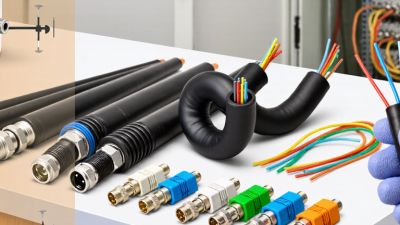
China’s cable harness assembly sector serves demanding markets, from electric vehicles to factory automation. A wiring harness is more than bundled wire. It combines conductors, connectors, terminals, insulation, and protective sleeving into a tested system. Small details matter: a poorly crimped terminal or a connector that does not seat fully can cause problems downstream.
MarketsandMarkets estimated the global wiring harness market at USD 83.1 billion in 2023 and forecast USD 119.7 billion by 2028, a projected compound annual growth rate of 7.6%. This forecast describes the global market, not China alone. It does, however, show why buyers scrutinize suppliers’ engineering, production capacity, and quality controls. Manufacturing-quality expert W. Edwards Deming is widely associated with the principle, “Quality is everyone’s responsibility.” For cable harness assembly, that means quality cannot rest on final inspection alone; it also depends on process control at each production step.
No ranking is perfect. Supplier capabilities vary by application, order volume, and required testing. This guide compares ten manufacturers in China using practical criteria, including product range, customization, manufacturing experience, and quality assurance. Buyers should still verify certifications, request relevant samples, and review inspection records before choosing a partner. A neat catalogue is not proof of a reliable production line.
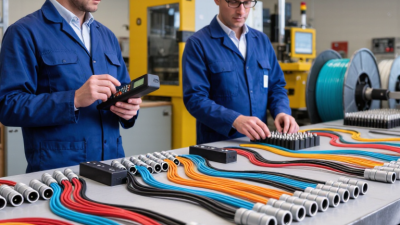
Cable harness assembly manufacturers turn electrical drawings into organized, tested wiring systems. They confirm connector types, wire gauges, branch lengths, and operating conditions with customers. Production may include cutting and stripping wires, crimping terminals, joining branches, and fitting sleeves or clips. Technicians arrange each harness on a board that mirrors its installation path. Small details matter. A misplaced label can slow installation; a weak crimp may fail under vibration.
Manufacturers also inspect workmanship and test electrical continuity, resistance, and circuit connections. IPC/WHMA-A-620 provides widely used criteria for cable and wire harness assembly quality. Its requirements help teams assess crimps, soldering, and mechanical workmanship. Demand is substantial: OICA reported about 93.5 million motor vehicles produced worldwide in 2023. That figure is not a harness-market estimate, but it shows the scale of one important application. Still, a clean-looking sample can hide a poor connection; visual checks alone are not enough.
Tips: Ask for a clear test plan, traceable material records, and sample results before approving production. Check whether drawings specify wire lengths, labels, and protective coverings. Small omissions happen, even in experienced shops. A short review can catch them early.
How to Evaluate Cable Harness Manufacturers in China
A cable harness is only as reliable as its drawings, materials, and process controls. Ask suppliers to show revision-controlled work instructions, incoming wire checks, crimp-force records, and continuity-test results. For a sample harness, inspect terminal seating, labels, bend radius, and strain relief. Small details matter. A polished factory tour is not proof of repeatable production.
Match the evaluation to the end use. The IEA’s Global EV Outlook 2024 reports nearly 14 million electric cars were sold worldwide in 2023, about 18% of all car sales. That growth raises demand for vehicle wiring, but it does not make every supplier equally capable. Check whether the factory can trace wire lots, terminals, and operators to each production batch. Review its testing plan against the applicable customer specifications and IPC/WHMA-A-620 workmanship criteria. Ask for evidence, not just certificates.
Compare suppliers using the same drawing, annual volume, and packaging assumptions. Confirm who approves substitutions, how engineering changes are recorded, and what happens when a test fails. Request a pilot run before committing to larger orders. Measure defects and delivery performance across several batches; one good sample can mislead. Freight time, tooling ownership, and communication across time zones also affect total cost. The uncomfortable part: a low quote may hide manual rework or weak traceability.
Suggested weighting for comparing suppliers. These percentages are an evaluation framework, not survey results or company rankings.
Assess each supplier against the same criteria and request supporting evidence, such as audit records, process documents, sample builds, and delivery performance data. Adjust the weights to fit your product and project requirements.
China’s Top 10 Cable Harness Assembly Manufacturers
China’s large vehicle market supports a deep cable-harness supply base, but production scale alone cannot identify the right supplier. The China Association of Automobile Manufacturers reported 31.28 million vehicles produced in 2024. That volume creates demand for reliable assemblies, from battery leads to dense dashboard looms. The Fortune Business Insights report valued the global automotive wiring harness market at US$52.07 billion in 2023 and projected US$91.21 billion by 2032. These figures show market growth, not a ranking of individual factories.
A credible top-ten comparison should examine engineering support, process control, traceability, and delivery performance. Ask whether a supplier can show crimp-height records, pull-test results, continuity checks, and clear change-control procedures. For complex projects, review samples with actual terminals and connectors, not just polished drawings. Also check how the factory handles low-volume prototypes and sudden specification changes. Small details matter.
A neat ranking can still mislead. Public data rarely reveals defect rates or customer retention, so buyers should verify claims through audits and trial orders. The IPC/WHMA-A-620 workmanship standard offers a useful reference for cable and wire harness assemblies, but certification alone does not guarantee consistent production. Look for evidence on the production floor: labeled bins, calibrated crimp tools, and operators following the same work instructions. That evidence is less glamorous, but more useful.
China’s leading cable harness assembly manufacturers serve automotive, industrial automation, medical equipment, energy, and consumer electronics projects. Their product ranges may include wire harnesses, control-panel assemblies, battery cables, coaxial leads, and overmolded cable sets. Details matter. A capable supplier can cut wires accurately, strip insulation cleanly, crimp terminals to specification, and protect joints with sleeves or molded housings. Some also provide prototyping, drawing review, and production testing.
Capabilities differ widely between factories. Some focus on high-volume automotive looms, while others handle short runs with complex routing and mixed connectors. Typical quality checks include continuity testing, pull-force sampling, dimensional inspection, and visual review of labels and seals. For demanding applications, buyers should ask about traceability, change control, material sourcing, and test records. A polished sample is useful, but it cannot prove stable production.
Manufacturers may support custom lengths, color coding, branch layouts, shielding, and protection suited to heat, vibration, or moisture. Ask whether engineering teams can flag bend-radius problems or terminal mismatches before tooling begins. Not every supplier catches these early. That is worth checking. Buyers should compare documented capabilities against drawings, expected volumes, and delivery plans, rather than relying on a broad product list.
This is an illustrative, non-ranked sourcing comparison of common cable-harness supplier capability profiles, not a verified list of ten named manufacturers. Capabilities and certifications vary by factory and should be confirmed directly through technical reviews, samples, and audits.
| Profile | Typical product focus | Common assembly capabilities | Relevant applications | Specifications to confirm |
|---|---|---|---|---|
| 1. Automotive harness specialist | Vehicle wiring harnesses, connectorized subassemblies, battery and sensor leads | Wire cutting and stripping, terminal crimping, splice processing, harness-board assembly, continuity testing | Passenger vehicles, commercial vehicles, electric-vehicle subsystems | Customer-specific quality requirements, traceability, crimp validation, environmental test coverage |
| 2. Industrial equipment harness supplier | Control-cabinet wiring, machine harnesses, power and signal cable assemblies | Manual and semi-automated assembly, wire marking, connector termination, bundling, electrical testing | Factory automation, pumps, motors, industrial machinery | Voltage and current ratings, conductor sizes, routing constraints, applicable market standards |
| 3. Consumer electronics harness supplier | Compact wire sets, internal device harnesses, ribbon and low-voltage cable assemblies | Fine-wire processing, small-pitch connector assembly, soldering where specified, visual inspection | Home electronics, office equipment, consumer devices | Minimum wire size, connector tolerances, insulation materials, production-volume requirements |
| 4. Medical-device cable assembly supplier | Device leads, sensor cables, patient-interface cable assemblies | Controlled assembly processes, connectorization, labeling, electrical inspection, documented lot control | Diagnostic, monitoring, and laboratory equipment | Device-specific regulatory obligations, material suitability, cleaning requirements, validation documentation |
| 5. Telecommunications harness supplier | Power leads, data cables, equipment interconnects, rack wiring | Connector termination, cable preparation, labeling, bundling, continuity and pin-mapping tests | Network equipment, telecom cabinets, data-center systems | Signal integrity needs, shielding, connector types, cable performance and test limits |
| 6. Renewable-energy cable assembly supplier | Power and control harnesses for energy-generation and storage equipment | Heavy-gauge wire processing, terminal installation, protective sleeving, electrical testing | Solar, wind, battery-storage, and power-conversion systems | Outdoor exposure, temperature range, voltage rating, sealing, and installation requirements |
| 7. Rail and transit harness supplier | Vehicle wiring looms, equipment interconnects, control and lighting harnesses | Harness-board assembly, cable identification, connectorization, inspection, test-record preparation | Rail vehicles, transit systems, and associated equipment | Project-specific fire and smoke rules, vibration requirements, documentation, and approval process |
| 8. Aerospace-oriented cable assembly supplier | Lightweight wiring assemblies, avionics interconnects, specialized cable sets | Precision termination, controlled routing, identification, inspection, and customer-defined testing | Aircraft and aerospace equipment programs | Required approvals, material and process controls, traceability, configuration management |
| 9. Marine and outdoor-equipment harness supplier | Sealed power leads, control wiring, corrosion-resistant cable assemblies | Connector assembly, sealing operations where specified, protective sleeving, continuity testing | Marine equipment, outdoor machinery, mobile equipment | Moisture and corrosion exposure, ingress protection needs, cable-jacket material, test conditions |
| 10. Custom low-to-medium-volume harness supplier | Prototype harnesses, made-to-order cable sets, mixed connector assemblies | Engineering sample builds, hand assembly, design-for-manufacturing feedback, functional testing | Product development, specialized equipment, replacement and niche-market parts | Prototype lead time, revision control, minimum order quantities, scale-up capacity, inspection plan |
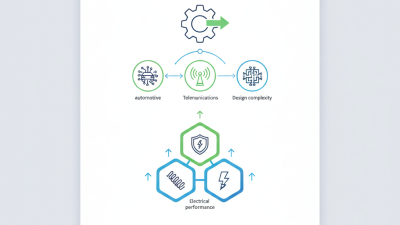
Cable harness suppliers in China serve automotive, factory automation, medical equipment, telecommunications, and renewable energy. Each sector imposes different demands: vehicle harnesses face vibration and heat, while medical assemblies often require tight routing and consistent labeling. Details matter. A misplaced clip can rub through insulation inside a moving machine.
Demand is growing in key end markets. The International Energy Agency’s Global EV Outlook 2024 reports nearly 14 million electric car sales in 2023, about 18% of global car sales. The International Federation of Robotics reported 541,302 industrial robot installations worldwide in 2023. These figures do not directly measure harness demand, but they show why suppliers must support changing vehicle platforms and automated production lines.
When evaluating a supplier, ask for documented crimp-pull test results, continuity checks, material traceability, and sample approval records. Review how the factory controls wire cutting, terminal insertion, and connector locking—not just its quoted price. For harsh environments, confirm temperature, abrasion, and moisture testing against your actual operating conditions. Request a pilot batch before committing to volume. A polished audit file is useful, but it cannot replace checking finished assemblies. I would also compare revision-control practices; this step is easy to overlook, and sometimes the paperwork lags behind the product.