Choosing reliable lead wire suppliers is a practical challenge for global buyers. Product quality affects electrical safety, assembly speed, and long-term equipment performance. A trustworthy supplier should provide clear specifications, consistent production, and responsive technical support. Price alone is not enough.
This guide examines suppliers through measurable details. These include conductor material, wire gauge, insulation type, voltage rating, temperature range, flexibility, and available customization. Buyers should request samples before approving large orders. A sample can reveal stiff insulation, uneven stripping, weak crimp performance, or inconsistent color coding. Small details matter.
Traceability matters too. Strong suppliers usually provide material records, inspection reports, and recognized quality certifications. Depending on the application, buyers may need compliance with relevant IEC, UL, or RoHS requirements. Requirements differ by market and end use. Careful verification remains essential.
Not every supplier serves every project well. A factory experienced with appliance wiring may not understand medical equipment requirements. A large catalog can also hide limited engineering support. This guide compares supplier capability, communication, production capacity, delivery reliability, and after-sales service. These factors help buyers select lead wire partners with greater confidence.
Still, no ranking can replace technical validation. Specifications may change. Production conditions may vary. Buyers should confirm current documents, test batches, and contract terms directly with each supplier. A stronger decision combines published evidence with hands-on review. That approach is less convenient, but usually more dependable.
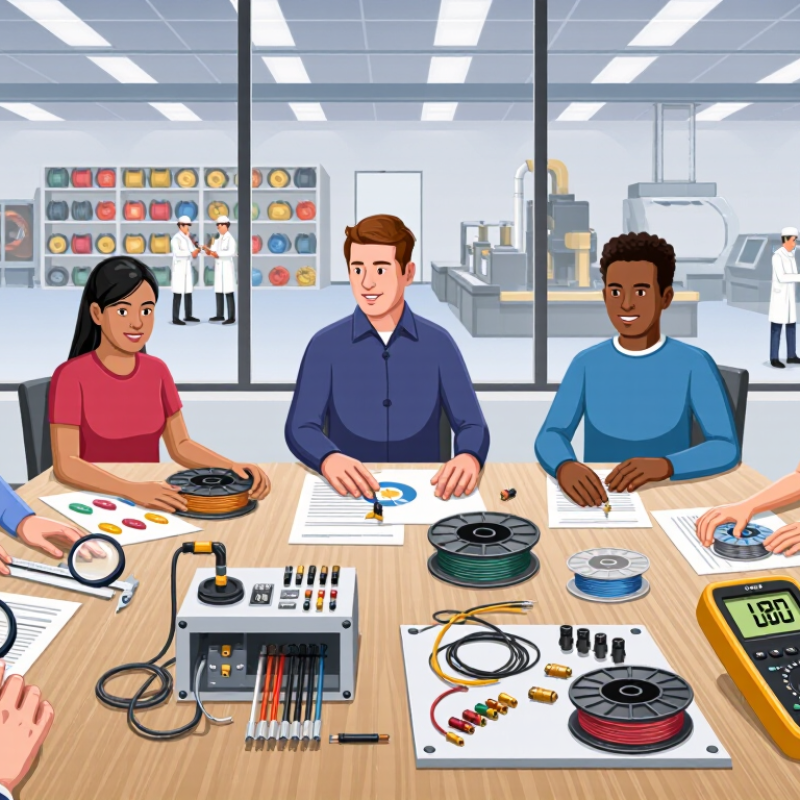
Lead wires are insulated conductors that carry power or signals between components and external circuits. They appear in motors, transformers, sensors, batteries, medical devices, and control panels. Global buyers need them because equipment crosses borders, while voltage, temperature, vibration, and certification requirements vary. The wire is small, but failure can stop an entire machine.
Demand is becoming more visible. The International Energy Agency reported nearly 14 million electric cars sold worldwide in 2023. IRENA recorded 473 GW of renewable-power capacity added in 2023, including about 346 GW of solar. These systems depend on reliable internal connections, from inverter assemblies to energy-storage packs. Lead-wire selection affects continuity, heat control, assembly time, and field safety. I check conductor material, cross-sectional area, insulation rating, bend radius, stripping length, and terminal compatibility. A datasheet alone is not enough. Batch variation can still create trouble.
Tips: Ask for voltage, temperature, flame, and aging-test evidence. Confirm whether dimensions use metric or AWG systems. Request traceability records and sample lengths before volume purchasing. IEC 60228 can help verify conductor classes, while IEC 60335-1 may apply to household equipment. Do not choose only by price. A cheaper wire may require extra labor or fail earlier. Some specifications look complete but omit repeated-flex testing. That omission deserves a second review.
Lead wires vary by insulation, conductor construction, temperature rating, and mechanical demands. Choosing the wrong type can create brittle insulation, unstable signals, or premature failure.
PVC-insulated lead wires suit control panels, household equipment, and low-temperature assemblies. They are flexible, economical, and easy to strip.
Silicone-insulated wires perform better near heaters, ovens, and vibrating machinery. Their soft jackets bend smoothly around tight corners.
PTFE-insulated wires support aerospace instruments, chemical equipment, and high-temperature sensors. They resist heat, oils, and many corrosive substances.
Fiberglass-braided wires add thermal protection for furnaces and industrial heating systems. They feel less flexible. That trade-off matters.
Tips: Match the wire to temperature, voltage, bend radius, and exposure conditions. Confirm conductor size under real current loads, not only catalog values. For moving equipment, test repeated flexing before full production. For sensors, verify insulation leakage and signal stability. Small details matter.
Crimped lead wires work well in removable assemblies and serviceable control units. Solder-terminated wires suit compact electronic modules and prototype equipment.
High-strand conductors improve flexibility, while solid conductors offer stable routing in fixed installations.
In practice, specifications can look perfect on paper yet fail beside heat, vibration, or sharp edges. Allowing extra length may simplify maintenance, but excessive slack can catch on nearby components. A careful trial installation often reveals problems that drawings miss.
When evaluating lead wire suppliers, start with the wire’s intended use, not a polished sales presentation. Ask for conductor material, cross-sectional area, insulation type, temperature rating, and voltage limits. These details should match your drawings and operating conditions.
Request samples from a normal production lot. Check conductor diameter, surface finish, insulation thickness, flexibility, and electrical resistance. A simple resistance test can reveal inconsistent copper or poor processing. Review tensile and elongation data, then compare laboratory results with your own inspection. Small differences matter. They often become field failures.
Compliance requires more than a certificate attached to an email. Confirm test reports, material declarations, batch traceability, and controlled production records. Ask whether the supplier follows applicable safety, chemical, and environmental requirements in your target markets. An on-site audit can examine calibration records, operator training, incoming material checks, and change-control procedures. Supplier experience also matters. Look for documented corrective actions, stable delivery history, and technical staff who explain failures clearly. Be careful with perfect claims. Even a capable factory can miss a defect, and audits cannot inspect every meter of wire. Define acceptance criteria, inspection frequency, packaging controls, and notification rules before approval. Keep these requirements in the purchase agreement.
Top Lead Wire Suppliers for Global Buyers?
Reliable lead wire manufacturers are concentrated in regions with mature electrical and electronics industries. China remains a major sourcing base, especially in coastal manufacturing clusters. Buyers can find flexible silicone, PVC, PTFE, and custom lead wires there. Strong exporters usually provide sample testing, production photos, and traceable batch records.
Germany and Central Europe are known for disciplined process control and consistent documentation. These suppliers often serve automotive, industrial, and medical equipment applications. Their factories may offer precise stripping, crimping, and terminal assembly. Prices can be higher, but stable tolerances may reduce production problems. Japan and South Korea also support dependable suppliers, particularly for compact wires and high-temperature applications. Their technical communication is often detailed and methodical.
North America offers reliable options for buyers needing short lead times and closer engineering support. Mexico is also important for export-oriented cable assembly, especially near automotive and electronics corridors. Before placing an order, request conductor size, insulation material, temperature rating, voltage rating, and applicable test reports. Ask how rejected batches are controlled. Small details matter.
A polished website proves little. Factory audits, sample evaluation, and export references offer stronger evidence. Some suppliers respond quickly but explain specifications poorly. That is a warning sign. I would compare three samples under the same bending and insulation tests. Even then, supplier performance can change after the first shipment. Regular inspections remain necessary.
| Region | Established Manufacturing Hubs | Common Lead Wire Applications | Typical Product Capabilities | Relevant Standards and Compliance | Export and Supply-Chain Advantages | Key Buyer Considerations |
|---|---|---|---|---|---|---|
| Mainland China | Guangdong, Jiangsu, Zhejiang, Fujian and the Yangtze River Delta | Appliances Lighting Power supplies Automotive components Consumer electronics | PVC, XLPE, silicone, rubber and PTFE-insulated wires; cut-and-strip processing; crimped, tinned and connectorized assemblies. | RoHS and REACH documentation for applicable markets; IEC-based cable construction; UL AWM documentation where required by the end product. | Large component ecosystem, broad material selection, high-volume production and extensive ocean, air and express-freight connectivity. | Verify conductor material, plating, insulation temperature rating, traceability, factory audit results and consistency between samples and mass production. |
| Taiwan | Taoyuan, Hsinchu, Taichung and southern industrial zones | Industrial controls Networking equipment Computer hardware Medical electronics | Fine-stranded and miniature wire, precision assemblies, high-temperature insulation and customized harness processing. | RoHS and REACH support is commonly available; IEC, UL and customer-specific qualification requirements are frequently used in export programs. | Strong electronics supply chain, mature engineering support, reliable process control and proximity to major Asian component markets. | Confirm minimum order quantities, tooling ownership, change-control procedures and the exact approval status of each wire construction. |
| Japan | Kanto, Chubu, Kansai and Kyushu industrial regions | Automotive Robotics Factory automation Precision equipment | Highly consistent fine wire, heat-resistant wire, flexible cable, miniature harnesses and application-specific constructions. | IEC and JIS-related specifications may apply; export projects commonly require detailed reliability, material and traceability documentation. | Strong reputation for process discipline, engineering precision, long-term product consistency and demanding industrial applications. | Pricing may be higher; buyers should assess qualification schedules, customization charges and availability for high-volume production. |
| South Korea | Gyeonggi, Chungcheong, Ulsan and southeastern manufacturing areas | Batteries Automotive electronics Displays Industrial equipment | Battery and power-related lead wires, high-flexibility constructions, high-temperature insulation and assembled cable sets. | RoHS and REACH requirements are commonly addressed for export markets; automotive and industrial programs may add customer-specific validation. | Advanced electronics and battery ecosystems, efficient port infrastructure and strong engineering capabilities for technically demanding products. | Request evidence for flex-life, thermal cycling, vibration, chemical resistance and current-carrying performance where applicable. |
| Germany and Central Europe | Germany, Czechia, Poland, Austria and neighboring industrial corridors | Industrial machinery Automation Rail systems Energy equipment | Control-cabinet wiring, flexible machine-tool cable, shielded wire, special-purpose cable and engineered harness assemblies. | CE-related technical documentation, RoHS and REACH obligations, plus applicable EN, IEC and sector-specific requirements. | Shorter delivery routes for European buyers, strong technical documentation, established testing infrastructure and regional logistics integration. | Compare total landed cost rather than unit price alone, including testing, certification, tooling, packaging and delivery terms. |
| United States and Mexico | Midwest and Southeast United States; northern and central Mexico manufacturing corridors | HVAC Appliances Automotive Industrial controls | Appliance lead wires, UL-recognized internal wiring, automotive harnesses, high-temperature wire and custom assemblies. | UL AWM or other applicable North American requirements may be requested; ASTM, SAE and customer specifications can also apply by sector. | Nearshoring benefits for North American buyers, established automotive and appliance clusters, and simplified regional replenishment. | Confirm whether the approval applies to the complete wire construction, the finished assembly or only individual components. |
| India | Maharashtra, Gujarat, Tamil Nadu, Karnataka and the National Capital Region | Electrical equipment Power systems Appliances Rail and infrastructure | PVC and XLPE wire, control wiring, appliance leads, industrial harnesses and selected high-temperature constructions. | IEC-based specifications are widely used; buyers may also require RoHS, REACH and destination-market product documentation. | Large engineering workforce, growing electrical and electronics manufacturing base, and competitive labor and processing costs. | Evaluate raw-material sourcing, export packaging, testing capacity, production planning and port-to-port logistics for overseas orders. |
| Vietnam and Thailand | Vietnamese northern and southern industrial zones; Thailand’s central and eastern economic corridors | Consumer electronics Automotive Appliances Motor assemblies | Standard insulated wire, compact harnesses, appliance leads, automotive wire processing and connectorized assemblies. | Export programs commonly address RoHS, REACH and IEC requirements; automotive projects may include additional customer validation. | Integration with Asian electronics and automotive supply chains, access to major seaports and increasing diversification of manufacturing capacity. | Check local content requirements, upstream material dependence, production scalability and the supplier’s experience with your destination market. |
A useful supplier comparison starts with a complete specification, not a unit price. Record conductor material, wire gauge, insulation type, temperature rating, length tolerance, and terminal design. Ask each supplier to quote the same quantity and packaging method. A low price may exclude tooling, testing, or export packaging. Check carefully.
Customization shows practical manufacturing strength. Request a sample with your actual dimensions and operating conditions. Review insulation thickness, crimp quality, bend performance, and label accuracy. Discuss minimum order quantities and tooling ownership before approval. A supplier should explain what can change without affecting safety or consistency. Vague answers deserve caution.
Delivery capability needs evidence, not optimistic promises. Compare sample lead time, production lead time, inspection time, and shipping options separately. Ask how the supplier handles copper shortages, rejected batches, and urgent revisions. Confirm the inspection process with photos, test records, and batch identification. Factory audits or independent inspections can improve confidence. Still, no system is perfect.
In my experience, communication speed often predicts project risk. A polished quotation can hide weak follow-up. Compare response quality over several technical questions, not one email. Also review payment terms, forecast flexibility, and delivery history for similar orders. A spreadsheet helps, but it cannot measure every supplier’s honesty. Allow time for mistakes.