
10 Cable Fittings Buying Tips for Global Buyers
Buying cable fittings for international projects is rarely a simple product comparison. A fitting may look identical in two catalogs, yet perform differently under heat, vibration, moisture, or chemical exposure. Thread type, sealing range, material, ingress protection, and certification all require careful checking. A small mismatch can delay an entire installation.
Cable-entry specialist Anders Berg offers a practical reminder: “A fitting is only as reliable as the installation around it.” That observation matters when reviewing suppliers, drawings, samples, and technical data. The correct cable fittings should suit the cable diameter, enclosure material, operating temperature, and site environment. A stainless-steel fitting may be sensible near saltwater, while a nylon option could reduce cost in a dry indoor cabinet. The cheapest choice is not always economical.
Global buyers also need to examine packaging, labeling, documentation, lead times, and replacement availability. Ask whether the quoted certification covers the exact model, not merely the product family. Confirm thread standards before shipment. A one-millimeter difference can stop assembly.
Some purchasing mistakes are obvious. Others appear only after installation. That is uncomfortable.
This guide presents ten practical buying tips for cable fittings across international supply chains. It considers technical performance, supplier credibility, total cost, and installation risk. No checklist is perfect. Still, a disciplined review can expose weak assumptions before containers leave the warehouse. Buyers should compare evidence, not promises, and leave room for questions that the first quotation fails to answer.
Define Cable Fitting Types and Their Applications
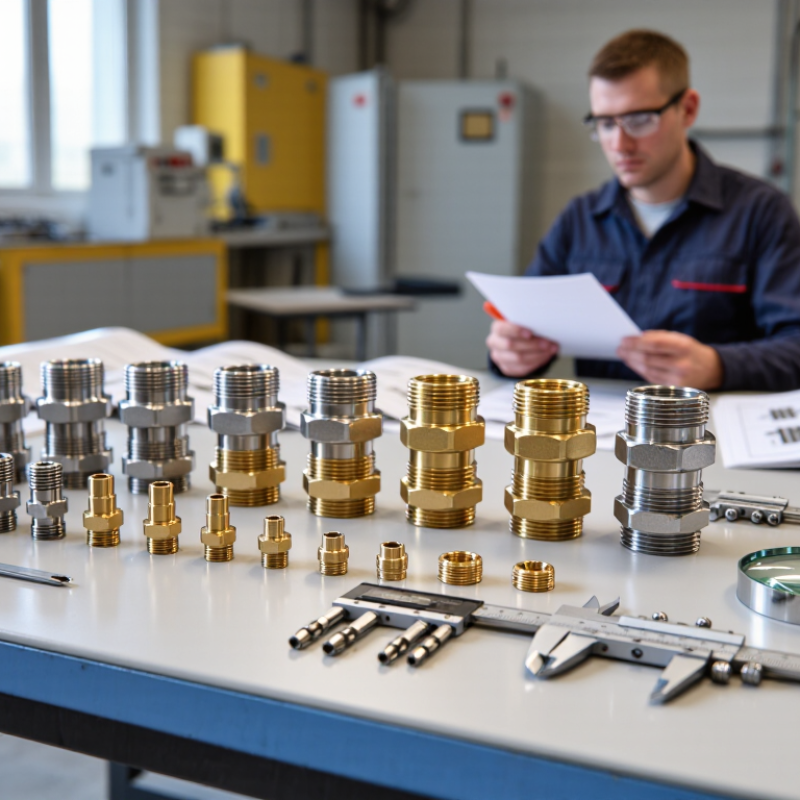
Cable fittings are not interchangeable accessories. They control connection, sealing, support, and cable entry. Cable glands secure cables entering panels, junction boxes, and outdoor enclosures. Select them by cable diameter, thread size, sealing level, and installation environment. Armoured cable glands also manage armour continuity and mechanical protection.
Cable lugs create reliable cable-to-terminal connections in switchboards, batteries, and industrial equipment. Compression lugs suit high-current conductors when matched with the correct crimping tool. Mechanical lugs can simplify field installation, but torque control remains essential. Cable cleats hold cables against movement during vibration or short-circuit forces. Conduit fittings connect protective conduits to boxes and equipment, especially where abrasion or moisture is expected.
Material choice should follow the application, not appearance. Nickel-plated metal may suit demanding industrial areas, while corrosion-resistant materials perform better near saltwater. Polyamide fittings can reduce weight in control cabinets. Check temperature range, ingress protection, thread standard, conductor size, and required certifications before ordering. In my installation reviews, mismatched thread standards caused more delays than damaged fittings. That mistake is easy to repeat. A fitting may look correct but fail to seal after thermal cycling. Leave room for uncertainty: confirm the actual cable outer diameter, enclosure wall thickness, and local compliance requirements with drawings and samples. Test fit one assembly before approving a large shipment.
| No. | Buying Dimension | Cable Fitting Type | Typical Application | Important Technical Data | What Global Buyers Should Check |
|---|---|---|---|---|---|
| 1 | Identify the cable construction | Unarmoured gland Armoured gland | Unarmoured fittings are used for PVC, rubber, XLPE and other cables without metallic armour. Armoured fittings are used where the gland must clamp and bond the armour. |
Unarmoured: seals the outer sheath and provides strain relief. Armoured: includes armour clamping and an earth-bonding path where required. |
Confirm the cable type, armour material, armour diameter or tape width, number of armour wires, and whether a separate earth tag or bonding arrangement is needed. |
| 2 | Match the cable outside diameter | Compression gland Strain-relief fitting | Electrical control panels, junction boxes, machinery, instrumentation and power distribution equipment. | The sealing range must cover the actual cable outside diameter. A correctly selected gland provides sealing, retention and strain relief without damaging the sheath. | Measure the finished cable diameter, including tolerances. Do not select only by nominal cable size or conductor cross-sectional area. Check the minimum and maximum sealing range. |
| 3 | Select the correct thread standard | Metric NPT PG Other regional threads | Enclosures, control cabinets, motors, cable trays, outdoor equipment and process-control assemblies. | Metric threads are commonly specified by nominal diameter and pitch. NPT is a tapered pipe thread defined by ASME B1.20.1. PG threads are an older German cable-entry system. | Match the fitting thread to the enclosure entry. Verify thread diameter, pitch, tolerance, thread length and whether an adapter or locknut is required. Do not mix metric and NPT threads. |
| 4 | Define the environmental protection level | IP-rated gland Outdoor cable entry | Outdoor lighting, renewable-energy equipment, industrial cabinets, marine equipment and washdown areas. | Under IEC 60529, the first IP digit describes protection against solids and dust, while the second describes protection against water. IP6X indicates dust-tight protection; IPX8 applies to continuous immersion under specified conditions. | Specify the required IP rating for the complete assembly, not only the gland. Confirm the test conditions, sealing washer, enclosure surface, cable diameter and installation torque. |
| 5 | Choose the fitting material | Polyamide Brass Stainless steel Nickel-plated brass | General industrial equipment, corrosive environments, outdoor installations, chemical processing and food-processing areas. | Polyamide offers low weight and electrical insulation. Brass provides mechanical strength and conductivity. Stainless steel offers high corrosion resistance. Nickel-plated brass adds a protective plated surface. | Evaluate UV exposure, salt spray, chemicals, humidity, temperature, mechanical loads and galvanic-corrosion risk between the fitting and enclosure. |
| 6 | Check operating temperature | Standard gland High-temperature gland Low-temperature gland | Outdoor power systems, cold-storage facilities, engine compartments, industrial ovens and equipment exposed to thermal cycling. | The fitting, sealing insert and cable sheath each have their own temperature limits. The usable system range is governed by the lowest applicable component rating. | Check continuous and intermittent temperature ratings, installation temperature, thermal expansion, seal compatibility and the cable manufacturer's allowable temperature. |
| 7 | Determine the mechanical requirement | Standard strain relief High-retention fitting 90-degree fitting | Robotic equipment, moving machinery, vibration-prone systems, compact enclosures and cable entries with limited clearance. | Key factors include cable retention, tensile load, bending radius, vibration resistance, impact resistance and fitting orientation. | Consider cable weight, vibration, repeated movement, side loading and available space. Use an angled fitting only when its bend radius and sealing performance suit the cable. |
| 8 | Verify electrical bonding and grounding | Armoured cable gland EMC gland Grounding accessory | Industrial power distribution, motor control, instrumentation, shielded signal cables and electromagnetic-interference-sensitive systems. | Armoured and EMC cable entries may provide armour or screen termination. The required arrangement depends on the protective-conductor design and applicable installation standard. | Confirm continuity resistance, armour or shield termination method, earth-fault requirements, bonding accessories and compatibility with the enclosure coating. |
| 9 | Check hazardous-area requirements | Certified hazardous-area gland Barrier gland | Equipment installed in areas where flammable gas, vapour, dust or fibres may be present. | Hazardous-area fittings may require specific protection concepts, such as flameproof, increased-safety or dust-protection certification. Barrier designs use sealing compound to prevent gas migration where specified. | Identify the area classification, gas or dust group, temperature class, equipment protection level, cable construction and certification requirements. Use only documentation applicable to the intended installation. |
| 10 | Confirm compliance, installation and logistics | IEC-compliant fitting Project-specific assembly | International infrastructure projects, OEM equipment, export control panels and multi-country electrical installations. | IEC 62444 covers cable glands and related requirements. Product documentation should identify materials, dimensions, sealing range, thread, temperature range, ingress rating and installation method. | Request drawings, test reports, certificates, torque values, compatible accessories, packaging details, customs classification information and spare-part availability before placing a global order. |
Note: Cable fitting selection must be verified against the cable manufacturer's data, enclosure design, applicable national regulations and the fitting manufacturer's installation instructions. IP performance depends on the complete installed cable-entry system.
Related Posts
-

China Top 10 Cable Ends Suppliers for Global Buyers?
-
Top Cable Fittings Suppliers in China for Global Buyers?
-
Understanding the Importance of Cable Clamps in Modern Electrical Installations
-

Top 10 Power Wire Types You Need for Your Electrical Projects in 2023
-
What Is a Lead Cable and How Is It Used?
-

10 Essential Tips for Choosing the Right Electrical Cable for Your Needs?