What Is a Lead Cable and How Is It Used?

A lead cable is a cable associated with lead, either as a protective sheath or as a flexible electrical connection. The exact meaning depends on the industry. In older power and telecommunications systems, lead may surround insulated conductors and protect them from moisture, chemicals, and physical damage. In equipment, “lead cable” can also describe the cable linking a device to a battery, sensor, electrode, or control panel.

The term is not perfectly consistent. That matters. A technician should check the cable’s construction, voltage rating, conductor size, insulation, and installation environment before choosing a replacement. A lead-sheathed cable may have a dull gray surface, sealed joints, and considerable weight compared with modern polymer-insulated cable. Its sheath can resist water well, yet repeated bending may create cracks near terminals or bends. Careful inspection is essential.

Lead cables are used where durability, shielding, or moisture resistance has practical value. They may appear in industrial plants, older buildings, underground routes, medical equipment, and specialized electrical systems. However, damaged lead materials require controlled handling and suitable protective procedures. Do not cut, sand, or disturb an unknown cable casually. Product documentation and qualified inspection provide safer answers than appearance alone.

This guide explains how a lead cable is built, where it is used, and how professionals evaluate its condition. Some applications vary widely. That limitation deserves attention. A reliable decision depends on the cable’s age, design, operating load, and local technical requirements.verter
What Is a Lead Cable and How Is It Used?

Lead Cable Defined: Lead’s 11.34 g/cm³ Density and Sheath Function

What Is a Lead Cable and How Is It Used?

Lead Cable Defined: Lead’s 11.34 g/cm³ Density and Sheath Function

A lead cable contains an insulated conductor protected by a lead sheath. Lead has a density of 11.34 g/cm³, making the sheath noticeably heavy. This weight can help a cable remain stable in trenches, ducts, or marine environments. More importantly, the sheath forms a continuous barrier against moisture, soil chemicals, and some industrial contaminants.

The sheath also offers useful electromagnetic shielding. However, it should not be treated as a perfect safety layer. Design performance depends on thickness, bonding, joints, and grounding. The U.S. Geological Survey’s Mineral Commodity Summaries 2025 reported approximately 4.5 million metric tons of global mined lead production in 2024. That figure shows lead remains an important industrial material, although cable applications represent only part of total demand. IEC 60840 and IEC 62067 provide relevant performance frameworks for certain high-voltage cable systems. Real projects still require engineering review.

A heavier sheath increases transport, installation, and support loads. That is easy to underestimate. Modern alternatives may reduce weight, but they can change flexibility and chemical resistance. Lead also requires controlled handling because exposure risks increase during cutting, stripping, or recycling.

Tips: Check the cable’s mass per metre before selecting trays or lifting equipment. Inspect sheath continuity after installation. Do not rely on visual appearance alone. A small split can allow water entry and accelerate insulation damage. Use current safety procedures for lead dust, waste, and worker protection.

Lead Cable Construction: Conductors, Insulation, Sheath, and Outer Protection

What Is a Lead Cable and How Is It Used?

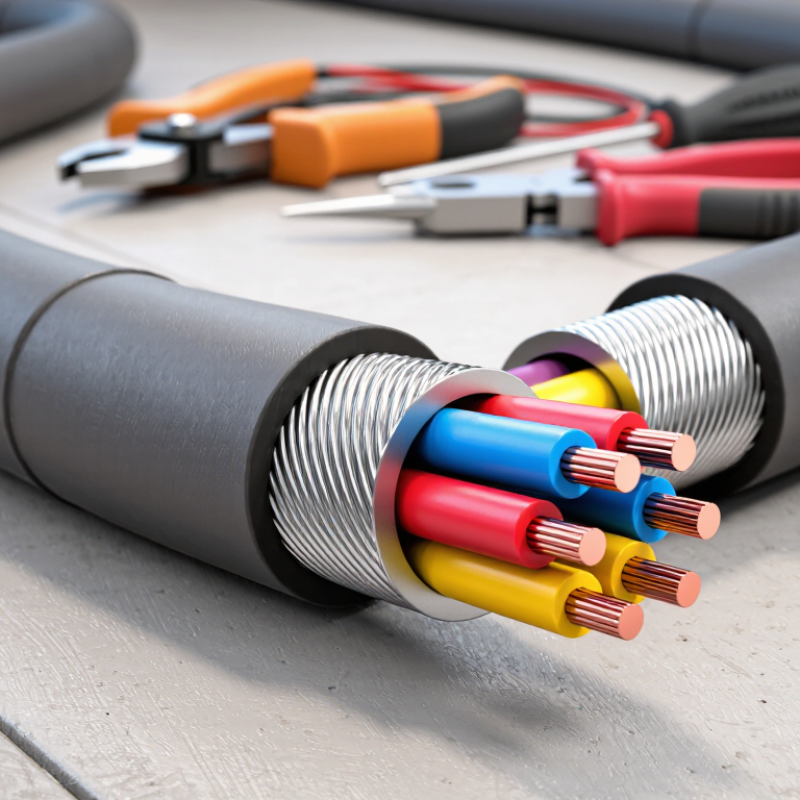
A lead cable uses a metallic lead sheath to protect internal conductors and insulation. Its construction usually includes conductors, insulation, a lead sheath, and outer protection. Copper conductors carry electrical current with low resistance. The conductor size determines allowable current and voltage drop. The conductor comes first.

Insulation separates each conductor from nearby conductors and the surrounding sheath. Common insulation materials resist heat, moisture, and electrical stress. For medium- and high-voltage cables, insulation quality directly affects service life. The lead sheath forms a continuous barrier against water, chemicals, and soil pressure. It can also provide shielding and help control electrical fields. However, lead adds considerable weight and requires responsible handling under applicable safety rules.

Outer protection usually includes bedding, armor, or a tough polymer jacket. These layers resist impact, abrasion, rodents, and repeated movement during installation. Installers must respect the cable’s minimum bending radius. Sharp bends can damage insulation or create stress points. In practice, small details matter. A cable may pass a visual check while hiding moisture at a termination. Testing should include insulation resistance, sheath continuity, and careful inspection of joints. A complete specification can still miss local temperature, burial depth, or chemical exposure. That weakness deserves review before installation. Qualified technicians should follow current electrical standards and environmental requirements when cutting, joining, or disposing of lead-sheathed cable.

Lead Cable Applications: Moisture Barriers in Power and Telecom Networks

What Is a Lead Cable and How Is It Used?

A lead cable uses a lead sheath around insulated conductors. The sheath creates a strong moisture barrier. In power networks, it helps protect insulation from groundwater, damp soil, and seasonal flooding. Telecom networks also use lead-sheathed cables in older underground routes, where water can travel along small gaps.

Lead resists moisture well and provides useful mechanical protection. It can also reduce electromagnetic interference when properly bonded and grounded. However, the material is heavy and can suffer from corrosion near damaged joints or harsh chemicals. Field inspections often find that the cable itself remains sound, while terminations fail first. No barrier is perfect. Poor sealing can defeat a good sheath.

Tips: Check joints, bends, and entry points for cracks or white corrosion products. Test insulation resistance after installation and during scheduled maintenance. Keep records of sheath continuity and grounding. A small inspection camera can reveal water collecting inside ducts. Replacement decisions should consider cable age, loading, soil conditions, and local environmental requirements. Older systems may need careful handling and updated protection methods. That is where judgment matters.

Lead Cable Ratings: IEC 60502-1 Voltage Classes of 1 kV and 3 kV

A lead cable usually has a protective lead sheath around its insulated conductors. The sheath helps resist moisture, soil chemicals, and some mechanical damage. It also adds weight and requires careful handling during installation. In practice, the word “lead” can cause confusion. It describes the sheath, not the cable’s voltage class.

IEC 60502-1 covers power cables with extruded insulation in two common voltage classes: 0.6/1 kV and 1.8/3 kV. These are often described as 1 kV and 3 kV cables. The first value refers to conductor-to-earth voltage. The second value refers to conductor-to-conductor voltage. A 3 kV cable is not automatically safer in every installation. Insulation, earthing, temperature, and fault conditions still matter. Cable selection should match the equipment and the installation environment.

Tips: Check the complete voltage marking, not only “1 kV” or “3 kV.” Inspect the sheath for dents, cracks, and corrosion before laying the cable. Keep bending within the manufacturer’s stated radius. A damaged lead sheath can admit moisture, even when the insulation looks untouched. Do not assume a larger voltage rating solves every problem. Actual performance depends on joints, terminations, ventilation, and load current. This detail is easy to overlook. It deserves a second check.

Lead Cable Safety: 327.5°C Melting Point, Handling, and Recycling

A lead cable is an electrical cable protected by a lead sheath. The sheath resists moisture, corrosion, and physical damage. It has been used in underground power systems, industrial equipment, and communication installations. Its weight is noticeable. The surface may also show dents or dull oxidation after years of service.

Pure lead melts at about 327.5°C, but this number does not make heating safe. Lead can produce hazardous dust and fumes before the metal visibly melts. Cutting, sanding, burning, or torch work requires strong local ventilation and suitable protective equipment. Keep food, drinks, and personal items away from the work area. Wash hands carefully after handling. Small oversights matter.

Do not strip old cable on bare soil or burn its covering. Collect damaged cable in sealed, labeled containers. Authorized recycling facilities can separate lead, insulation, and other metals under controlled conditions. Workers should check the cable’s condition, surrounding contamination, and applicable waste requirements before transport. A second inspection is worthwhile. Lead fragments can hide inside insulation or beneath floor debris. Recycling is safer when the material stays contained from removal to processing. Personal assumptions are not enough; site-specific risk assessment and professional guidance should determine the handling method.