China Top 10 Cable Pulling Rope Manufacturers
Choosing a supplier for cable pulling rope requires more than comparing prices or catalog photos. The rope may pass through crowded ducts, over rollers, or across rough ground. Small details matter. Construction, fiber type, diameter, splice quality, and rated breaking strength can affect handling and service life.
This guide introduces ten manufacturers in China for buyers seeking practical options. It offers a starting point, not a guarantee that every company suits every project. Product ranges and production capabilities can change, so confirm current specifications directly with each manufacturer. Ask for rope samples, technical data sheets, and test records that match the exact product being quoted. Check how the supplier describes working load, elongation, abrasion resistance, and storage requirements. Those figures need context. A high breaking-strength value alone does not establish suitability for a particular pulling system.
Compare more than specifications. Review customization options, lead times, quality-control processes, export experience, and the clarity of technical support. Request written answers, especially when a project has unusual route lengths or operating conditions. Some details may remain unclear until a sample is tested in the intended setup. That is worth acknowledging. A concise shortlist can help, but careful verification protects the final decision. Use the profiles that follow to identify manufacturers for further evaluation, then confirm every critical claim before placing an order.
What Cable Pulling Rope Is and Where It Is Used
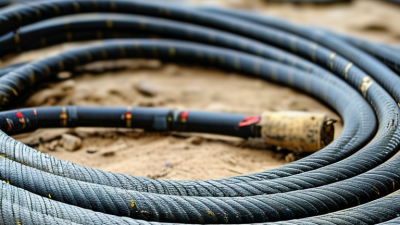
Cable pulling rope is the tensile link between a winch and a cable during installation. It may connect through a pulling eye, swivel, or grip. Its job is simple: transfer pulling force while helping guide cable through a route. Not simple in practice. Rope choice affects handling, stretch, abrasion resistance, and installation control.
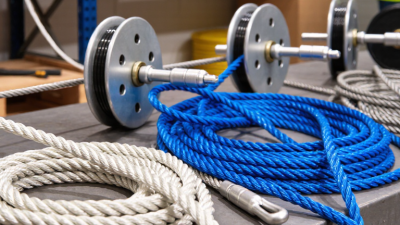
Crews use pulling rope in underground ducts, building conduit, utility corridors, and overhead line work. A typical setup might include a winch, sheaves, a rope, and a cable grip. The rope must suit the route, cable weight, bend radius, and pulling method. Low-stretch synthetic rope can help control movement; other materials may suit different site conditions. Breaking strength is not a safe working load. Check manufacturer specifications and the project’s approved limits before pulling.
The need for careful cable installation is growing with grid upgrades. The International Energy Agency’s 2023 report, Electricity Grids and Secure Energy Transitions, says annual grid investment needs to rise to more than US$600 billion by 2030. That figure describes grid investment, not rope demand. Still, it shows why reliable installation equipment matters. One detail is easy to underestimate: sharp duct edges can abrade rope quickly. Inspect the line before use, and replace it when damage is found.
How Cable Pulling Rope Is Made in China
Chinese cable-pulling rope production starts with fiber selection. Polyester offers abrasion resistance, while high-modulus polyethylene can reduce rope weight. Incoming yarn is checked for consistency before twisting or braiding. The strands pass through tension-controlled machines, where operators watch for uneven thickness and loose crossings. Small details matter. Some factories add a protective coating or heat-set the braid to improve handling and dimensional stability. The right treatment depends on the rope’s intended load and work environment.
Before dispatch, samples are checked for diameter, linear density, elongation, and breaking force. ISO 2307:2019 specifies methods for determining physical and mechanical properties of fibre ropes, giving buyers a common basis for comparison. Production records should link test results to batches, not just finished samples. The World Bank’s World Development Indicators report manufacturing value added at roughly 26% of China’s GDP in 2023, reflecting the scale of the country’s manufacturing base, though not rope quality by itself. A clean test result is useful, but it cannot reveal every weak splice or handling flaw. That part still needs careful inspection.
Criteria for Selecting China’s Leading Cable Pulling Rope Manufacturers
Selecting a Chinese cable-pulling-rope manufacturer should begin with the job conditions, not a catalogue headline. Ask for batch-specific breaking-load results, diameter tolerance, elongation, and rope construction details. The IEA’s 2023 report, Electricity Grids and Secure Energy Transitions, estimates that about 80 million kilometres of electricity grids must be added or refurbished by 2040. That is roughly the length of today’s global grid. The scale points to rising demand for reliable installation equipment, but it does not prove that any supplier meets your needs. Details matter.
Compare test records with the loads, bend radii, and surfaces expected on site. Request evidence of abrasion and moisture testing, plus traceable production-batch records. Check how eye splices are made and whether the finished rope is inspected. A factory audit or sample trial can reveal issues that a certificate may not. A neat test sheet is not the whole story. I would still question results that lack test conditions or sample identification. Ask for clear limits on storage and service life, too; these are easy to overlook. Price and delivery time matter, but neither can replace repeatable test results and responsive technical support.
Criteria for Selecting China’s Leading Cable Pulling Rope Manufacturers
Suggested evaluation weights for comparing manufacturers of cable pulling rope. Prioritize load capacity and rope construction, then assess wear resistance, elongation, traceability, customization, and technical support. These are selection guidelines, not measured company results or rankings.
Profiles of 10 Cable Pulling Rope Manufacturers in China
Profiles of ten cable pulling rope manufacturers in China reveal a varied production landscape. One focuses on braided polyester lines for low stretch; another offers lightweight ropes for indoor conduit work. A third emphasizes large-diameter pulling lines, while a fourth makes compact ropes for telecom installations. The fifth profile centers on custom lengths and end fittings.
Details matter.
Buyers should check fiber specifications, diameter tolerances, and stated breaking strength, rather than relying on appearance alone.
Other profiles include a manufacturer serving utility contractors, one supplying construction-site pulling gear, and one with testing records for each production batch. A smaller workshop may accept short runs, though its delivery capacity needs careful checking. Another producer specializes in export packing, protecting coils from moisture and abrasion. The tenth offers several rope constructions, but a broad catalog does not prove consistent quality.
These profiles describe common areas of specialization, not audited claims about named companies.
Request sample data and confirm test methods. Real-world performance can vary. A rope that feels sturdy in hand may still stretch more than expected under load.
How to Compare Manufacturers, Products, and Supply Capabilities
China Top 10 Cable Pulling Rope Manufacturers
Comparing manufacturers starts with the rope’s working conditions, not its advertised breaking load. Check fiber type, braid construction, diameter tolerance, elongation, abrasion resistance, and behavior when wet. Ask for batch-specific test reports and confirm how breaking strength was measured. A cable route with sharp bends may wear rope differently from a straight, clean duct. Small details matter.
Supply capability deserves equal scrutiny. The International Energy Agency’s Electricity Grids and Secure Energy Transitions (2023) estimates that more than 80 million kilometers of grids must be added or refurbished by 2040. That scale makes production consistency, lead times, and replacement stock practical selection criteria. Request a sample, inspect the splice and surface finish, and compare its measured diameter and flexibility with the technical sheet. Ask whether the supplier can provide repeat batches with the same construction and documented quality checks.
A low quotation can conceal longer delivery windows or limited traceability. Compare packaging, moisture protection, customization options, and response times alongside price. For critical pulls, discuss safe working load separately from minimum breaking strength; they are not interchangeable. A polished datasheet is useful, but it cannot prove field performance.
I would still want a controlled trial before committing to a large order.