
Top 10 Zinc Die Casting Parts Manufacturers in China

Zinc Die Cast Parts are found in door handles, electrical housings, appliance fittings, and compact hardware. Their appeal is practical: zinc alloys can fill fine features, support consistent production, and reduce finishing work. But a polished sample tells only part of the story. Tool design, alloy control, inspection, and communication all shape the final result.

Casting authority John Campbell is often credited with the principle, “The quality of a casting is determined by the quality of the liquid metal.” That idea is relevant to zinc, too. A capable supplier must manage the process behind the part, not just present an attractive catalog. For overseas buyers, useful questions include whether a factory can share dimensional reports, explain its tooling approach, and respond clearly when a specification changes. Details matter. A small variation around a threaded boss can create trouble during assembly.

This guide introduces ten zinc die casting manufacturers in China and considers their services, production strengths, and potential fit for different projects. The aim is not to declare one universal winner. Supplier capabilities change, and public information can be incomplete. That deserves a second look. Treat the list as a starting point, then verify current equipment, quality records, sample performance, and delivery terms directly with each manufacturer. A careful review may take longer, but it can prevent costly surprises later.
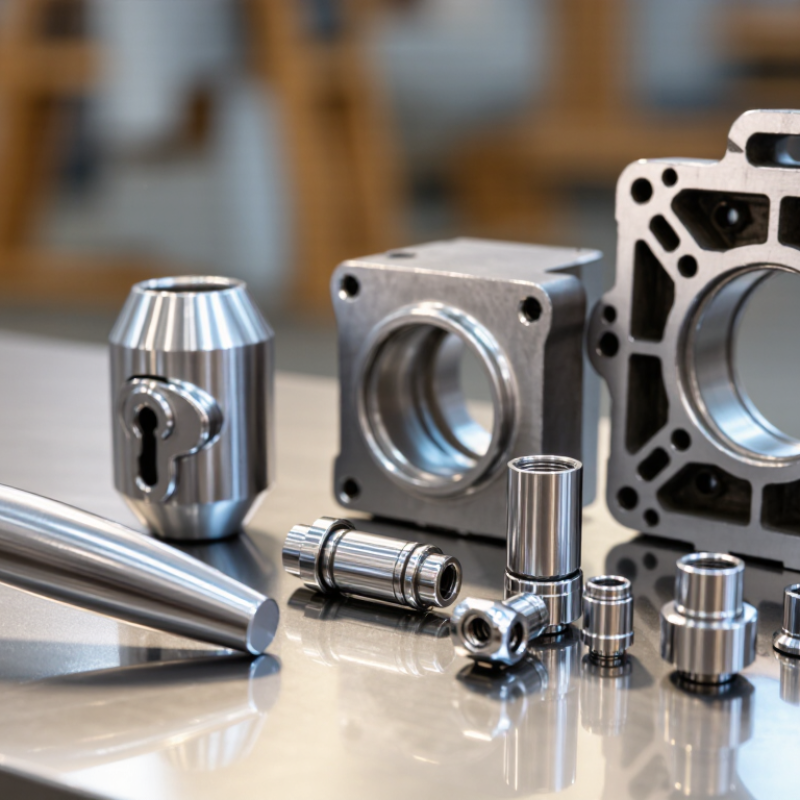
Top 10 Zinc Die Casting Parts Manufacturers in China

Zinc Die Casting Parts and Their Role in Chinese Manufacturing

Zinc die casting parts support many everyday products made in China, from door handles and appliance knobs to small gear housings. Molten zinc alloy fills a steel die under pressure, forming detailed shapes with relatively smooth surfaces. The process suits components that need consistent dimensions and repeatable production. Thin ribs, mounting points, and threaded features can often be designed into one part, reducing later assembly work.

For Chinese manufacturers, these parts connect tooling, machining, finishing, and quality checks across a dense industrial supply chain. A well-designed die can produce many components quickly, but tool design and maintenance still matter. Poor venting may leave surface defects; uneven cooling can affect dimensions. These issues are not always obvious in a drawing. A practical review checks wall thickness, draft angles, critical tolerances, and how the part will be inspected. Zinc is useful, not universal. Component size, operating temperature, and load should guide material and process choices.

Tips: Share a 3D model and key tolerances early. Ask how samples are measured, and inspect actual parts before approving production. Small details matter.

Criteria for Evaluating Zinc Die Casting Manufacturers

Criteria for Evaluating Zinc Die Casting Manufacturers

A capable supplier should show more than a polished sample. Ask how it controls alloy composition, melt temperature, die temperature, and cycle time. Small variations can affect thin walls, flash, and surface finish. Request inspection records for dimensions, porosity, and mechanical properties, plus a clear plan for tool maintenance. Ask for proof. A sample part is useful, but production consistency matters more.

Supply resilience deserves attention, too. The USGS Mineral Commodity Summaries 2024 estimated global zinc mine production at about 12 million metric tons in 2023. That figure does not predict a foundry’s costs, but it highlights why buyers should ask about material sourcing, inventory, and price-adjustment terms. Review the supplier’s quality procedures, production capacity, and experience with parts of similar size and geometry. For critical dimensions, check whether its measurement equipment and sampling frequency match your drawing. Numbers matter. A clean audit score can still miss practical issues, such as delayed tool repairs or weak communication during a design change. Ask for recent inspection examples, not just certificates.

Top 10 Zinc Die Casting Parts Manufacturers in China - Criteria for Evaluating Zinc Die Casting Manufacturers

Use these criteria to assess and compare suppliers. The suggested weights are a buyer-defined evaluation framework, not an industry ranking or universal standard.

Supplier evaluation checklist — suggested weights total 100%.
Evaluation criterion Suggested weight What to verify Useful evidence or indicators
Relevant die-casting experience 15% Experience producing parts with comparable geometry, wall sections, appearance requirements, and annual volumes. Representative part records, process descriptions, production history, and references that can be contacted with permission.
Engineering and design-for-manufacturing support 15% Ability to review draft, parting lines, gating, venting, ejector layout, machining allowances, and inspection requirements before tooling is released. Documented design reviews, mold-flow or filling analysis where appropriate, and written recommendations linked to the part drawing.
Quality management and traceability 12% How the supplier controls revisions, inspection records, nonconformities, corrective actions, and material or batch traceability. Current quality-system certificate with verifiable scope, control plans, inspection records, corrective-action examples, and lot-identification procedures.
Dimensional and process control 12% Whether critical dimensions and process variables are measured and controlled against the buyer-approved drawing and specification. First-article inspection reports, calibrated measurement equipment, capability data for agreed critical characteristics, and defined sampling plans.
Tooling design, ownership, and maintenance 10% Tool life expectations, repair responsibilities, spare inserts, maintenance intervals, and ownership or transfer terms. Written tooling quotation and maintenance plan, tool inspection records, clear ownership terms, and an agreed process for tool changes.
Alloy and material control 10% Whether the proposed zinc alloy meets the application and whether incoming material and any recycled content are controlled to specification. Alloy specification agreed in writing, supplier material certificates where required, incoming inspection records, and batch traceability.
Surface finishing and secondary operations 8% Capability to meet specified requirements for trimming, machining, plating, painting, or other finishing processes. Approved samples, finish specifications, inspection results, and documented controls for outsourced processes when applicable.
Production capacity and delivery planning 7% Whether available machines, shifts, staffing, and downstream capacity can support the forecast and agreed delivery schedule. Capacity review, production schedule, lead-time assumptions, on-time delivery history, and a documented contingency plan.
Compliance and customer-specific requirements 6% Ability to meet applicable market, product, restricted-substance, packaging, and customer documentation requirements. Requirement-by-requirement compliance matrix and supporting test reports or declarations where required by the order or destination market.
Commercial transparency and communication 5% Clarity of pricing, tooling charges, minimum order quantities, payment terms, change control, and communication responsibilities. Itemized quotation, written assumptions and exclusions, agreed response contacts, and a documented process for engineering or schedule changes.

Comparison tip: Score each criterion consistently (for example, 1 = insufficient evidence and 5 = verified, strong evidence). Confirm tolerances, acceptance limits, and compliance obligations in the part drawing, purchase specification, and contract rather than assuming one set of limits applies to every project.

Profiles of 10 Zinc Die Casting Parts Manufacturers in China

Profiles of ten Chinese zinc die casting manufacturers are most useful when compared by capability, not catalog size. The range includes automotive-housing specialists, connector producers, plumbing-hardware makers, furniture-fitting suppliers, door-and-window hardware shops, electronics-component plants, lighting-part makers, industrial-enclosure producers, miniature-part specialists, and factories combining tooling with finishing. Their differences show up in practical details: thin-wall consistency, threaded-hole accuracy, surface porosity, and how well parts survive plating. Small parts matter.

The USGS Mineral Commodity Summaries 2024 estimated global refined zinc production at about 13 million metric tons in 2023. This is not a die-casting output figure, but it provides useful context for the material supply chain.

When assessing these supplier profiles, request alloy specifications, sample inspection records, tool-maintenance plans, and clear defect criteria. A polished sample is not enough; production consistency deserves its own check. Some supplier claims can be hard to compare, so buyers should define acceptance limits before quoting.

Tips: Send a dimensioned drawing and expected annual volume. Ask for a first-article report, plus photos of the actual casting and finish.

Comparison of Manufacturer Capabilities and Product Specialties

Comparing China’s leading zinc die casting parts manufacturers means looking beyond quoted price. Their capabilities often differ in machine size, tooling support, batch flexibility, and finishing options. Some suppliers are better suited to compact, thin-walled parts, such as connector housings or small hardware. Others handle larger components or recurring production runs more efficiently. Ask about the available clamping-force range and how the factory controls dimensional variation. A sample part can reveal flash, surface marks, and fit issues that a product photo may miss.

Product specialties matter, too. One manufacturer may focus on precision components with tight tolerances; another may offer integrated machining, deburring, plating, or powder coating. Check whether these operations happen in-house or through outside partners, since handoffs can affect lead time and consistency. Small details matter. Review inspection records, material specifications, and tooling-maintenance practices before comparing capacity claims. A polished brochure can still hide a narrow process range. Conversely, a smaller supplier may provide careful engineering feedback and faster sample revisions. No single capability ranking fits every project, and the comparison deserves a second look when requirements are unclear.

Key Factors in Selecting a Chinese Zinc Die Casting Supplier

Selecting a Chinese zinc die-casting supplier requires evidence of process control, not just a low quotation. The USGS Mineral Commodity Summaries 2025 estimates that China mined about 4 million metric tons of zinc in 2024, roughly one-third of global output. This signals a substantial materials base, but it does not guarantee consistent alloy quality at any individual factory. Ask for alloy certificates linked to production lots and records of incoming-material checks.

Request samples made with production tooling, not hand-finished display pieces. Inspect thin ribs, parting lines, ejector marks, and critical holes against the drawing. For pressure-tight or cosmetic parts, ask how porosity is monitored and which inspection methods are used. A polished sample can hide internal voids. I would not overvalue a perfect first sample; it may say little about repeatability.

Review capability data for key dimensions, tool-maintenance schedules, and corrective actions. Confirm whether machining, finishing, and packaging appear in the same control plan. Ask the supplier to explain how it manages die temperature, cycle variation, and rejected parts. A short pilot run with agreed sampling limits can test those claims. ISO 9001 certification helps, but it cannot replace component-level evidence. Request written change-notification terms, too; small process changes can affect flash or fit.