What Are the Top Types of Airplane Wire in 2026?

Airplane wire may look simple on a parts list, but its construction affects weight, heat tolerance, signal quality, and service life. In 2026, the main types include copper, aluminum, silver-plated copper, shielded wire, and coaxial cable. Each serves different needs. There is no single best choice.

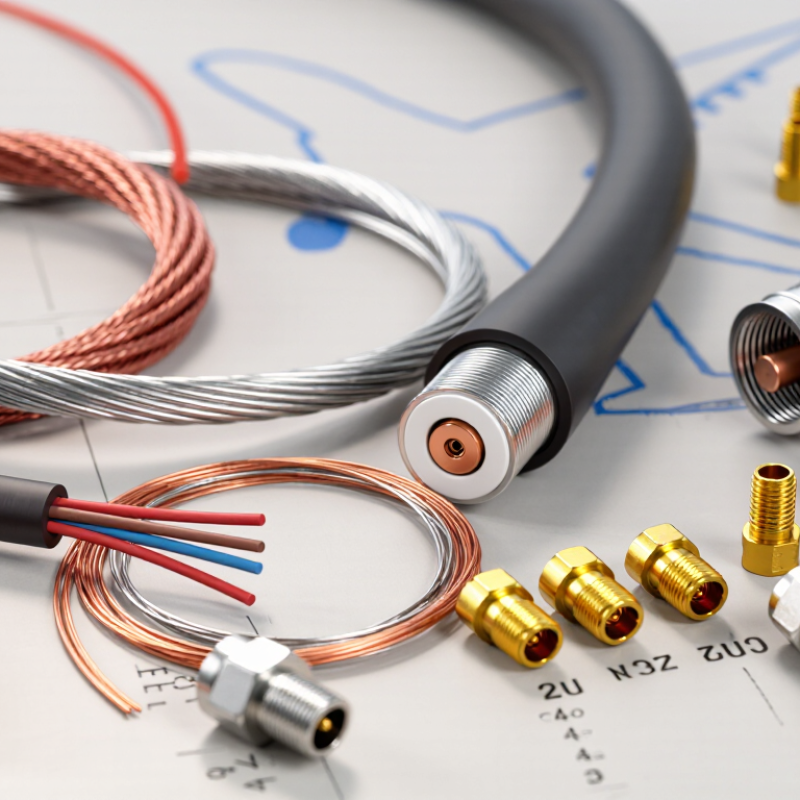
Copper remains common because it conducts electricity well and handles repeated bending. Aluminum can reduce weight, though its installation and connection details need careful attention. Silver-plated copper is useful in some high-temperature or high-frequency applications, but it is not automatically better for every circuit. Shielded wire helps limit electrical interference. Coaxial cable carries radio-frequency signals through a central conductor and surrounding shield.

Small details matter. Insulation also deserves close inspection. Aircraft cables may use materials such as fluoropolymers or cross-linked compounds, selected for temperature, abrasion, fluid, and smoke requirements. Those properties vary by product, so the data sheet matters more than a broad material label. Wire gauge, routing, connector compatibility, and operating conditions should be considered together. A lightweight cable can still be the wrong fit if its current capacity or environment rating falls short.

This guide compares the leading airplane wire types and explains where each may fit. It also points out trade-offs that are easy to miss when comparing catalog descriptions. One caution: naming a wire type is not enough to establish suitability. Always verify the applicable aircraft documentation and manufacturer specifications before selection.
What Are the Top Types of Airplane Wire in 2026?

Aircraft Wire Classification by Construction, Insulation, and Function

Aircraft wire is not a single product category. By construction, installers distinguish solid conductors from stranded wire. Stranded conductors bend more readily around tight equipment bays; solid wire is less flexible and suits fewer aircraft applications. Shielded and coaxial cables add layers for signal control. These details matter when a wire passes through a vibrating frame or sits beside sensitive electronics.

Insulation provides another classification. Common aerospace specifications cover fluoropolymer-insulated wire, chosen for heat and fluid resistance, and other materials suited to different temperature ranges. Selection must match the aircraft’s approved design and maintenance data, not just a temperature label. The FAA’s AC 25.1701-1 treats wiring as part of the broader electrical wiring interconnection system, including connectors and installation features. Small details count. A sound wire can still fail if its support or routing is poor.

Function further separates power, control, data, and radio-frequency wiring. SAE AS50881 provides aerospace wiring installation practices, while the FAA’s 2023 General Aviation and Part 135 Activity Survey estimated about 211,000 active U.S. general aviation aircraft. That varied fleet makes one universal wire choice unrealistic. In a real inspection, technicians check markings, damage, routing, and compatibility with the aircraft documentation. Classification helps, but it does not replace inspection. Even clear categories can leave room for judgment.

Single-Conductor Aircraft Wire for General Electrical Circuits

Single-conductor aircraft wire is widely used for general electrical circuits, including lighting, instruments, and control-panel connections. It has one conductive core surrounded by insulation, making routing and identification straightforward. The details matter. Wire size must suit circuit current, run length, and allowable voltage drop. Insulation also needs to match expected heat, vibration, and exposure to fluids or abrasion.

Choosing wire by appearance alone is a poor shortcut. A thin, flexible lead may fit a tight panel, yet still be unsuitable for its electrical load. Bundled wires can retain heat, so the installation layout matters too. Check the aircraft’s approved design and maintenance documentation for conductor size, insulation requirements, and protection methods. Small details are easy to miss.

During installation, keep runs supported and clear of sharp edges, moving parts, and hot surfaces. Use suitable terminals, and make connections that resist loosening under vibration. A tidy route helps future inspection, but neatness does not prove electrical suitability. I would still verify the circuit requirements before selecting a replacement; assumptions can creep in, especially when an old wire looks serviceable. Single-conductor wire is versatile, not universal.

What Are the Top Types of Airplane Wire in 2026? - Single-Conductor Aircraft Wire for General Electrical Circuits
Wire Insulation Type Typical Construction Common Circuit Uses Key Characteristics Selection Considerations
Cross-linked ETFE Single copper conductor with thin-wall, cross-linked fluoropolymer insulation. General aircraft power, lighting, control, and instrument circuits. Lightweight insulation with good resistance to abrasion, fluids, and cut-through compared with many conventional wire insulations. Confirm conductor plating, wire gauge, insulation wall, and temperature and voltage limits against the approved wire specification.
ETFE Single copper conductor covered with ethylene tetrafluoroethylene insulation. General electrical wiring where a compact, durable insulated wire is suitable. Fluoropolymer insulation offers useful resistance to chemicals and abrasion while allowing relatively thin insulation designs. Properties vary by formulation and specification; check bend, installation, and environmental requirements.
PTFE (TFE) Single conductor with polytetrafluoroethylene insulation, available in aircraft wire constructions. Circuits exposed to elevated temperatures or demanding chemical environments. Offers high-temperature capability and strong chemical resistance. Insulation can be susceptible to mechanical damage or cold flow under pressure; use only where the specified construction suits the installation.
FEP Single conductor with fluorinated ethylene propylene insulation. General circuits requiring fluoropolymer insulation and chemical resistance. Provides good chemical resistance and dielectric properties; it is a melt-processable fluoropolymer. Temperature capability and mechanical performance depend on the particular wire specification; compare with PTFE and ETFE options for the installation.
Polyimide-film insulated wire Single conductor wrapped with thin polyimide film, sometimes with additional protective layers. Space-constrained installations and certain approved aircraft wiring applications. Can provide a thin, lightweight insulation system with high-temperature capability. Evaluate the complete wire construction and applicable aircraft requirements, including moisture, abrasion, and arc-tracking considerations.
Silicone-insulated wire Single conductor covered with flexible silicone rubber insulation. Applications requiring flexibility, including some higher-temperature or vibration-prone locations. Highly flexible and capable of service over a broad temperature range in suitable constructions. Silicone insulation may have lower abrasion and cut resistance than tougher thin-wall fluoropolymer constructions; routing and protection matter.
PVC-insulated wire Single conductor with polyvinyl chloride insulation. Limited or legacy applications where the aircraft design and approved documentation permit it. Can be economical and practical for suitable low-stress electrical applications. Do not assume suitability for modern aircraft circuits; verify temperature, fire, smoke, fluid, and airworthiness requirements.
Selection note: No insulation type is universally best. Wire gauge, conductor material and plating, insulation construction, temperature and voltage ratings, environmental exposure, installation method, and approved aircraft documentation must all be considered. Ratings are specification-dependent.

Shielded and Twisted-Pair Wire for Noise-Sensitive Systems

Shielded and twisted-pair wire helps protect noise-sensitive aircraft systems, including audio, data, and sensor circuits. The two features work differently. Twisting the conductors helps reduce electromagnetic pickup, while a surrounding shield can limit interference from nearby power wiring or equipment. Small details matter.

A technician should preserve the pair’s twist as close to the connector as the installation allows. Untwisting too much can weaken noise rejection. The shield also needs a termination that matches the aircraft’s wiring design; grounding it casually at both ends may create unwanted current paths. Follow the approved wiring documentation.

Shielded cable can add weight, stiffness, and installation time, especially in tight bundles behind panels. It is not automatically better. A well-routed unshielded pair may suit some circuits, while a long run beside switching equipment may need stronger protection. Cable selection should account for signal type, routing, connector layout, and maintenance access. Even a technically suitable wire can disappoint if its bend radius is ignored or its shield is damaged during rework. Verify the specified wire construction before installation, and inspect the finished routing for abrasion, strain, and loose terminations.

Coaxial and Data-Cable Types for Communications and Avionics

What Are the Top Types of Airplane Wire in 2026?

Coaxial and Data-Cable Types for Communications and Avionics

For aircraft communications, coaxial cable carries radio-frequency signals between antennas, radios, and related equipment. Its center conductor sits inside an insulating layer and conductive shield. That shield helps limit interference, but it does not make routing irrelevant. Sharp bends, crushed sections, or poorly secured connectors can weaken signal performance. Small details matter.

Digital data cables serve avionics networks, linking sensors, displays, and other onboard systems. Depending on the aircraft design, they may use twisted pairs or shielded conductors to manage electrical noise. Cable selection depends on the system’s speed, distance, installation environment, and equipment requirements. A data cable is not interchangeable with coax. This distinction is easy to blur.

In practice, engineers and maintenance teams check approved aircraft documentation before selecting or replacing cable. They also inspect shielding, connector fit, bend radius, and support points. A neat-looking installation can still conceal damage beneath a clamp. And a cable that worked on one aircraft may not suit another. There is no universal “top” cable: the right choice follows the system design, qualified components, and careful inspection.

Thermocouple and High-Voltage Wire for Specialized Applications

What Are the Top Types of Airplane Wire in 2026?

Thermocouple and High-Voltage Wire for Specialized Applications

Thermocouple wire supports temperature measurement near engines, exhaust systems, and other heat-sensitive equipment. It carries a small signal created by a temperature difference between two junctions. The wire’s alloy must match the thermocouple type. Polarity matters. Reversing the leads can produce misleading readings, even when the sensor looks correctly installed.

Extension wire also needs suitable insulation for its route. A bundle near a hot duct faces different conditions from one inside a protected instrument panel. Engineers should check temperature limits, vibration exposure, and connector compatibility against the aircraft design requirements. A tidy bench test can still miss interference or heat effects found after installation. That’s an easy detail to overlook.

High-voltage wire serves specialized power and ignition applications, where insulation and spacing are critical. Designers consider operating voltage, transient peaks, temperature, altitude, and mechanical movement. At reduced air pressure, electrical stress can behave differently, so insulation performance must be assessed for the intended environment. Abrasion protection matters, too. A small rub point against a bracket can become a weak spot over time. Selection should follow verified system specifications and qualified engineering review, not voltage rating alone. A little uncertainty is normal; it should prompt testing, not guesswork.