
How to Choose the Right Drilling Rig?

Choosing the right Drilling Rig begins with the ground, not the brochure. A compact machine may suit a narrow site with shallow, predictable layers. A larger rig may be necessary for deeper work, harder rock, or demanding production targets. Yet size alone is not a reliable guide. Consider the required depth, hole diameter, drilling method, access limits, and available power before comparing models.

Site conditions matter. Clay, loose gravel, fractured rock, and groundwater can each change the equipment and tooling required. Check the rig’s rated capacity against the actual project plan, and ask how performance figures were measured. A rating on paper does not guarantee the same result in wet, uneven ground. Good operators know this. They also inspect service access, spare-part availability, transport needs, and the working space around the machine. A rig that reaches the site but cannot be maintained there may become an expensive problem.

Think beyond the purchase price. Fuel use, tooling wear, setup time, and operator training all affect the cost of a drilling shift. Ask suppliers for specifications, maintenance records, and references from comparable projects. Where possible, review the machine in operation. Listen to the engine. Watch how the mast is positioned. Small details can reveal more than a sales sheet, though one site visit cannot answer everything.

There may be no perfect choice. Project estimates change, and ground conditions can surprise even experienced teams. Leave room for uncertainty. Match the rig to the work you can verify, then confirm the final selection with qualified drilling and equipment professionals.
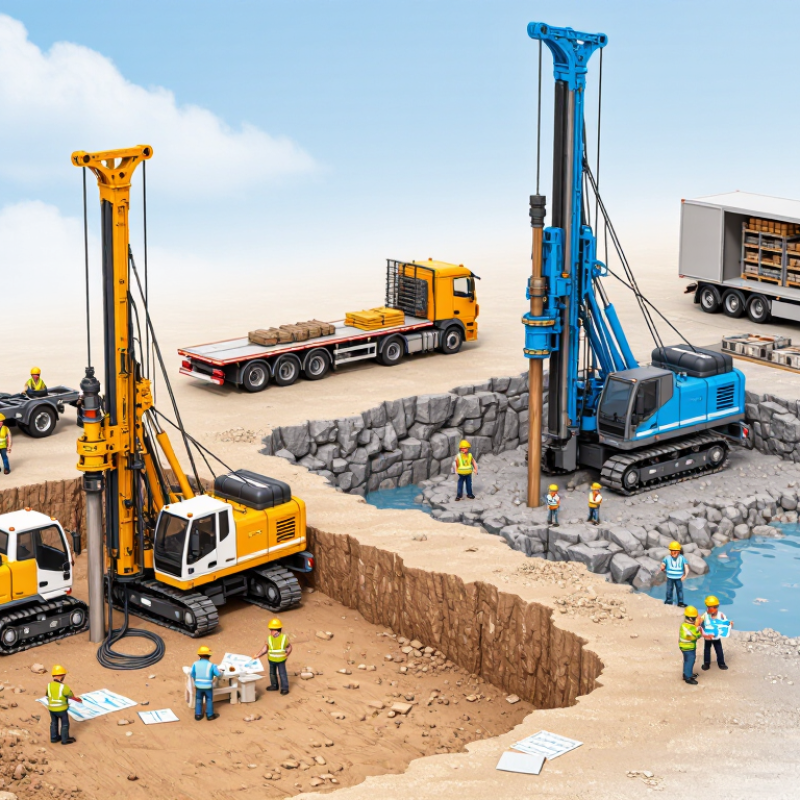
How to Choose the Right Drilling Rig?

Define the Drilling Project’s Requirements

How to Choose the Right Drilling Rig?

Define the Drilling Project’s Requirements

Before selecting a drilling rig, define the worksite and the expected result. Start with the required hole diameter, depth, angle, and quantity. Then identify the ground conditions, including soil layers, gravel, rock hardness, and groundwater. A geotechnical report provides useful evidence, but field conditions can still differ. Prepare for that uncertainty.

The rig must fit the site, not only the drilling plan. Measure entrance widths, overhead clearance, turning space, and ground bearing capacity. Consider transport weight, mast height, power availability, noise limits, and weather exposure. Rotary rigs may suit softer formations, while percussion methods can handle harder rock. However, the wrong method can reduce sample quality or increase tool wear. I have seen projects underestimate setup time. That mistake affects both cost and safety.

Compare Drilling Rig Types and Operating Methods

Choosing a drilling rig starts with the ground, access, and the hole you need. Rotary rigs use a rotating bit and are common for deeper holes in varied formations. They can handle changing ground, but the support equipment and fluid system take space. In a narrow yard, that matters. Percussion rigs drive a heavy tool into the ground, breaking material with repeated impacts. They are useful in some hard or fractured formations, though progress can be slower and noisier. Auger rigs remove soil with a helical flight and often suit shallow holes in stable ground. Simple setup. But loose or water-bearing layers can complicate the work.

Operating method changes the choice as much as rig type. A direct-circulation system pumps drilling fluid down the drill pipe and carries cuttings back up the annulus. It helps cool the bit and stabilize certain boreholes, but fluid handling needs careful planning. Air drilling can clear cuttings quickly in suitable formations, yet dust control and changing ground conditions deserve attention. For shallow geotechnical work, hollow-stem augers may allow sampling without open-hole fluid circulation. Check the required depth, diameter, access route, noise limits, and expected geology before comparing production rates. Ask operators about setup time and sample quality, not only drilling speed. A fast rig is not always the better fit. Field conditions often surprise you, and estimates can be wrong.

Evaluate Ground Conditions and Drilling Capacity

Before choosing a drilling rig, match its method to the ground profile, not just the project depth. FHWA’s Soils and Foundations Reference Manual explains that the Standard Penetration Test records blow counts over the final 300 mm of sampler penetration, after a 150 mm seating interval. These N-values help compare soil resistance between borehole layers. They do not tell the whole story: gravel, cobbles, groundwater, and weak rock can still change drilling performance. Small details matter. Review nearby borehole logs, then confirm conditions with site-specific investigation where uncertainty remains.

Next, compare the rig’s rated torque, crowd force, mast clearance, and tooling with the expected strata and required bore diameter. Loose, saturated sand may call for temporary casing or a method that limits borehole collapse; dense gravel or rock may need different tooling and greater torque. Check capacity at the planned depth, not only the rig’s headline maximum. FHWA guidance also emphasizes documenting groundwater and soil or rock transitions, since these affect construction decisions. A practical check is to ask whether the rig can maintain stable progress while handling the heaviest expected tooling. Specs can look reassuring on paper. I would still treat them as estimates: actual ground conditions often vary between nearby locations. Use the investigation record and the operator’s assessment together, and leave capacity for unexpected layers.

How to Choose the Right Drilling Rig?

Evaluate ground conditions together with expected drilling productivity. The chart shows representative penetration rates for a mid-size rotary drilling rig drilling approximately 600 mm diameter holes.

Indicative planning values: actual performance depends on borehole diameter, drilling depth, tooling, groundwater, rock strength, fractures, and operator technique. Confirm selection through site investigation and field trials.

Assess Power, Mobility, Safety, and Maintenance Needs

Choosing the right drilling rig starts with matching power to the ground, not simply selecting the largest machine. Hard rock, dense clay, and loose soil demand different torque, rotation speed, and feed force. A rig with excessive power may waste fuel and damage tools. One with too little power can overheat during long cycles. Check the required hole diameter, depth, drilling angle, and daily workload. Real site conditions often differ from soil reports.

Mobility matters when access is narrow or uneven. Track-mounted rigs handle muddy surfaces better, while compact units suit low-clearance areas and indoor work. Measure gates, ramps, overhead cables, and turning space before delivery. Safety features should include stable platforms, emergency stops, guarding, and clear operator visibility. I have seen small access errors delay a project for hours. That mistake is easy to repeat.

Tips: Inspect hydraulic lines, drill rods, clamps, and fluid levels before every shift. Record unusual vibration, slow movement, or rising temperatures. These details often reveal faults early. Follow the maintenance schedule, but do not treat it as perfect. Dust, cold weather, and long operating hours may require more frequent servicing. Keep spare wear parts available, and train operators to stop when equipment behaves unexpectedly. Reliable drilling depends on disciplined checks, not just machine power.

Select the Rig Based on Cost, Efficiency, and Service Support

How to Choose the Right Drilling Rig?

A rig’s purchase price is only one part of its cost. Compare fuel use, crew requirements, consumables, transport, and routine maintenance over the expected project life. A lower-priced unit may become expensive if it needs frequent repairs or takes longer to move between sites. Look at actual operating records from jobs with similar ground conditions, not just figures from a sales sheet.

Efficiency depends on matching the rig to the work. Consider target depth, bore diameter, soil or rock, access limits, and the number of locations planned. For example, a compact rig may reach a tight backyard site, while a larger rig may complete deeper holes with fewer moves. Fast is not always efficient. Setup time, stable positioning, and consistent drilling matter too.

Service support deserves equal attention. Ask how quickly a technician can reach your site, which parts are commonly stocked, and whether maintenance instructions are clear. Request references from operators who have used the rig through a full working season. Check the details. A spreadsheet can make one option look like the obvious choice, but it may miss downtime caused by difficult access or slow parts delivery. I would leave room for that uncertainty when comparing bids.