| Material Selection |
| Conductor Material |
- Annealed copper: high conductivity and good flexibility.
- Tinned copper: improved resistance to oxidation and corrosion.
- Copper alloy: increased strength for repeated flexing or vibration.
|
Conductor material affects electrical resistance, current-carrying capacity, crimp performance, fatigue life, and corrosion resistance.
|
Request conductor specifications, wire gauge or cross-sectional area, plating details, resistance values, and relevant material certificates.
|
| Insulation Material |
- PVC: economical, widely used, and suitable for general-purpose harnesses.
- XLPE: better temperature and abrasion performance than standard PVC.
- Silicone rubber: very flexible and suitable for wide temperature variation.
- ETFE or other fluoropolymers: thin-wall, chemical-resistant, and high-temperature applications.
|
Insulation determines temperature capability, flexibility, chemical resistance, abrasion resistance, flame behavior, and service life.
|
Confirm the insulation type, wall thickness, operating temperature range, voltage rating, flame rating, and chemical compatibility data.
|
| Terminal and Contact Plating |
- Unplated copper or brass: suitable only where environmental exposure is limited.
- Tin plating: common for general electrical connections and corrosion protection.
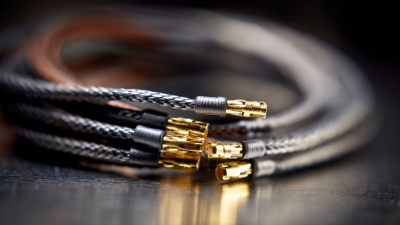
- Gold plating: used where low contact resistance and high mating-cycle performance are required.
|
Plating influences contact resistance, fretting corrosion, insertion force, mating durability, and environmental reliability.
|
Request base-metal and plating specifications, plating thickness, mating-cycle requirements, and salt-spray or environmental test results where applicable.
|
| Sealing and Protective Materials |
- Heat-shrink tubing for insulation and strain relief.
- Grommets and cable seals for splash or dust protection.
- PVC, PET, or fabric braid for abrasion protection and bundling.
- Potting or overmolding for enhanced environmental protection.
|
Protection materials help prevent moisture ingress, abrasion, vibration damage, contamination, and accidental conductor exposure.
|
Confirm ingress-protection targets, shrink ratio, adhesive lining where required, material compatibility, and dimensional tolerances.
|
| Manufacturing Process Capability |
| Wire Cutting and Stripping |
- Programmable cutting for controlled length.
- Automatic or semi-automatic stripping for repeatability.
- Blade setup matched to conductor and insulation construction.
|
Incorrect length or damaged conductor strands can cause poor fit, increased resistance, weak crimps, and assembly failures.
|
Ask for cut-length tolerances, strip-length tolerances, first-piece approval records, and inspection methods for nicked or missing strands.
|
| Terminal Crimping |
- Application-specific tooling matched to terminal and wire size.
- Controlled crimp height and width.
- Pull-force verification based on wire size and terminal design.
|
A properly formed crimp provides low electrical resistance and strong mechanical retention without damaging the conductor.
|
Request crimp-height records, crimp-force monitoring data, cross-section samples, pull-test results, and terminal applicator maintenance records.
|
| Soldering and Welding |
- Controlled solder temperature, dwell time, and wetting.
- Ultrasonic welding for selected conductor and terminal designs.
- Defined acceptance criteria for solder joints and insulation clearance.
|
Process control reduces cold joints, excessive solder wicking, overheating, brittle connections, and inconsistent electrical performance.
|
Review work instructions, operator training records, temperature-control records, visual standards, and destructive-test results.
|
| Connector and Component Assembly |
- Terminal insertion with positive locking verification.
- Connector keying and cavity-position control.
- Use of secondary locks, seals, clips, and strain-relief components as specified.
|
Correct assembly prevents terminal back-out, misalignment, intermittent connections, and installation errors in the final product.
|
Request assembly drawings, cavity maps, poka-yoke controls, terminal-retention test procedures, and sample inspection records.
|
| Routing, Taping, and Bundling |
- Fixtures or boards used to control branch locations and overall geometry.
- Specified tape overlap, braid coverage, and branch breakout dimensions.
- Protection against excessive bend radius and cable strain.
|
Consistent routing ensures proper fit, avoids excessive mechanical stress, and supports efficient installation and maintenance.
|
Request harness boards or fixtures, dimensional drawings, branch-location tolerances, bend-radius requirements, and visual inspection standards.
|
| Quality Control System |
| Incoming Material Inspection |
- Part-number and revision verification.
- Dimensional, visual, and quantity checks.
- Traceability for wire, terminals, connectors, seals, and protective materials.
|
Incoming controls prevent incorrect, counterfeit, damaged, or out-of-revision materials from entering production.
|
Ask for incoming inspection plans, lot traceability procedures, supplier certificates, and nonconforming-material controls.
|
| In-Process Inspection |
- First-piece and setup approval.
- Crimp-height, strip-length, pull-force, and terminal-position checks.
- Layered process audits and operator self-inspection.
|
In-process checks identify defects before a complete harness is assembled, reducing rework and preventing repeated process errors.
|
Review control plans, inspection frequency, measurement-system records, operator training, and corrective-action documentation.
|
| Electrical Testing |
- Continuity and point-to-point verification.
- Short-circuit detection.
- Insulation resistance testing when required.
- Dielectric withstand testing when required by the application specification.
|
Electrical tests verify circuit identity, detect miswires, and identify insulation or assembly faults that may not be visible.
|
Request test coverage, fixture capability, programmed test records, test-voltage settings, acceptance limits, and product traceability.
|
| Mechanical and Dimensional Inspection |
- Overall length, branch position, connector orientation, and breakout dimensions.
- Terminal retention and crimp pull-force checks.
- Visual inspection for damaged insulation, incomplete locks, and exposed conductors.
|
Mechanical conformity ensures that the harness can be installed without force, interference, or unintended stress on terminals and connectors.
|
Request inspection reports, calibrated measuring-equipment records, dimensional samples, and documented acceptance criteria.
|
| Environmental and Reliability Testing |
- Temperature cycling and thermal aging.
- Vibration and mechanical shock testing.
- Humidity, water, dust, or salt-spray testing when relevant.
- Flexing or bend-cycle testing for dynamic applications.
|
Reliability testing demonstrates whether the selected materials and assembly methods can withstand the actual operating environment.
|
Provide the application profile and request test plans, sample quantities, test duration, acceptance criteria, and laboratory reports.
|
| Documentation and Traceability |
- Controlled drawings, bills of materials, and work instructions.
- Lot, date, operator, machine, and inspection-record traceability.
- Formal nonconformance and corrective-action processes.
|
Good documentation supports repeatable production, faster root-cause analysis, controlled engineering changes, and regulatory compliance.
|
Ask for document-control procedures, revision history, change-notification rules, batch records, and corrective-action response targets.
|
| Supplier Qualification Indicators |
- Quality management system appropriate to the intended industry.
- Calibrated inspection and test equipment.
- Qualified operators and documented process training.
- Defined defect classification and corrective-action procedures.
|
A mature quality system lowers variation, improves delivery consistency, and provides evidence that production controls are maintained over time.
|
Conduct a process audit, review recent quality metrics, verify calibration status, evaluate sample harnesses, and confirm capacity for the required volume.
|
| Selection Priorities by Application |
| General Industrial Equipment |
PVC or XLPE insulation, copper or tinned copper conductors, standard crimped terminals, continuity testing, and dimensional inspection.
|
Prioritize cost, stable production, correct circuit mapping, abrasion protection, and reliable connector retention.
|
Compare total landed cost, standard lead time, first-pass yield, electrical test coverage, and change-control capability.
|
| High-Temperature or Chemical Exposure |
XLPE, silicone rubber, or fluoropolymer insulation selected according to the actual temperature and chemical environment; sealed connectors may be required.
|
Standard PVC may not provide adequate thermal, chemical, or aging performance in harsh environments.
|
Request material data, temperature-aging results, chemical-compatibility testing, sealing verification, and application-specific validation samples.
|
| High-Flex or Repeated-Motion Applications |
Fine-stranded conductors, flexible insulation, controlled bend radius, strain relief, and validated flex-cycle testing.
|
Repeated bending can cause conductor fatigue, insulation cracking, terminal loosening, and intermittent electrical faults.
|
Specify motion path, bend radius, cycle count, speed, load, and temperature; request test results that reproduce the intended service conditions.
|
| Moisture, Dust, or Outdoor Exposure |
Sealed connectors, grommets, adhesive-lined heat-shrink tubing, corrosion-resistant plating, and environmental validation.
|
Moisture and contamination can reduce insulation resistance, accelerate corrosion, and create intermittent or unsafe connections.
|
Confirm the required ingress-protection level, sealing design, material compatibility, environmental test method, and inspection criteria.
|