
7 Best Hex Nut Suppliers for Global Buyers?

Choosing a Hex Nut supplier is not just a price comparison. A small mismatch in thread size, material, or finish can delay assembly and weaken confidence in a shipment. For global buyers, reliable sourcing means checking product consistency, documentation, production capacity, and communication before placing a large order.

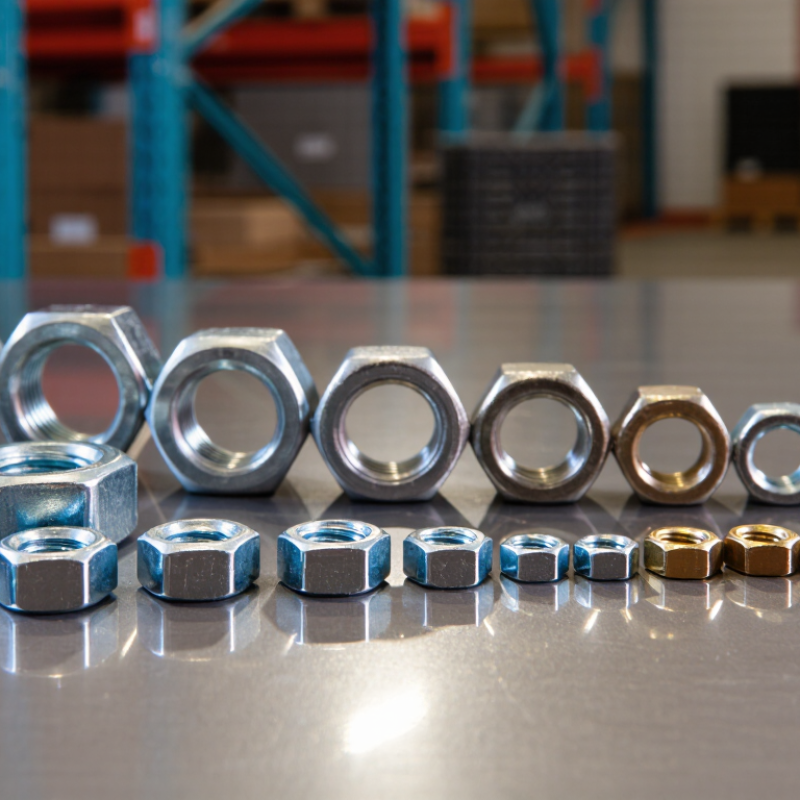
John H. Bickford, a respected engineer and author on bolted joints, emphasizes that fastener performance depends on the joint’s design, not on the nut alone. That is a useful reminder when comparing suppliers. A polished sample may look convincing under bright warehouse lights, but buyers also need clear specifications, traceable inspection records, and repeatable quality across production batches. Ask about material grades, dimensional checks, packaging, and how the supplier handles defects. Details matter.

This guide reviews seven Hex Nut suppliers for buyers seeking dependable options across international markets. It considers product range, manufacturing capabilities, export experience, and the clarity of each supplier’s quality information. No shortlist can remove every sourcing risk. Supplier claims still deserve verification, and the best choice may differ between a small maintenance order and a high-volume production contract. Some details are easy to overlook. Use the comparison as a starting point, then confirm that each supplier can meet your exact requirements before committing.
7 Best Hex Nut Suppliers for Global Buyers?

Hex Nuts: Types, Materials, and Common Industrial Uses

Hex nuts look simple, but their shape and grade affect how a joint performs. Standard hex nuts suit general assemblies; heavy hex nuts provide more bearing area for structural connections. Jam nuts are thinner and often paired with another nut, while flange nuts spread pressure across a wider surface. Locking styles help resist loosening from vibration, though they still need correct installation.

Material choice matters. Carbon steel is common in machinery and construction because it offers strength at moderate cost. Stainless steel helps resist corrosion in damp or washdown environments, while brass appears in some electrical and plumbing assemblies. The ISO 898-2 mechanical-property standard classifies carbon- and alloy-steel nuts by property class. Match the nut’s class to the bolt, and check thread fit, coating, temperature, and exposure. A corrosion-resistant finish is not a substitute for choosing the right base material.

Market figures provide context, not a buying specification. Grand View Research valued the global fasteners market at USD 90.6 billion in 2023 and forecast 4.5% annual growth from 2024 to 2030. World Steel Association reported 1,882.6 million tonnes of crude steel production in 2024, reflecting steel’s broad industrial role. Neither figure measures hex nuts alone. That distinction matters. For critical joints, verify dimensions and mechanical properties against the relevant standard; supplier descriptions can leave details unclear.

How to Evaluate Hex Nut Suppliers for Global Procurement

When evaluating hex nut suppliers, begin with the application, not the lowest quotation. Specify thread size, pitch, material, strength class, finish, and required standard. A dependable supplier should explain which specifications they can meet and identify any limitations. Details matter. Ask how hardness, dimensions, and thread fit are checked during production, not only before shipment.

Request samples and inspect them with suitable gauges. Check for clean threads, consistent dimensions, smooth bearing faces, and coating coverage around the corners. Ask for inspection records and material traceability linked to production lots. A sample can look excellent while a later batch varies; this risk is easy to overlook. Confirm how the supplier controls changes to raw materials, tooling, and process settings. If an answer is vague, ask again.

For global procurement, compare minimum order quantities, production lead times, packaging, and shipping terms in writing. Clarify how nuts will be protected from moisture and abrasion during transport. Review whether the supplier has experience with your required documentation and can provide updates when schedules shift. Communication is evidence, too. Keep a record of approved samples and specifications, then compare incoming batches against them. Even a careful process can miss a detail, especially when specifications change late.

7 Best Hex Nut Suppliers for Global Buyers? How to Evaluate Hex Nut Suppliers for Global Procurement

Use dimensional conformance as one practical checkpoint when evaluating hex nut suppliers. The chart shows nominal widths across flats for selected metric hex nuts specified in ISO 4032.

Compare supplier drawings and inspection results with the applicable standard and tolerances. Dimensions shown are nominal and do not replace verification of the required product specification.

Seven Hex Nut Suppliers Serving International Buyers

International buyers can find hex nuts through seven supplier types: export-focused manufacturers, regional fastener distributors, cold-heading specialists, stainless-steel producers, custom machining shops, project stockists, and sourcing agents. Each serves a different purchasing need. A distributor may ship mixed sizes quickly, while a manufacturer may offer better control over material and production batches. Custom shops can handle unusual dimensions, but their lead times may vary.

Ask for the material grade, thread specification, dimensional tolerances, and inspection records before comparing quotations. Check whether sample nuts match the production batch, and confirm how parts are packed for long-distance transport. Clear carton labels and moisture-resistant packaging help prevent confusion when shipments arrive. Details matter. A polished catalogue is useful, but it cannot replace verifiable test reports or a clear response about quality problems. No supplier fits every order, and a ranking can change with quantity, destination, and required delivery date.

Tips: Send a drawing or specification sheet, not just a photo. Request a small sample and confirm the agreed inspection method in writing. Compare total landed cost, including freight and packaging, rather than unit price alone. If answers remain vague, pause before placing a large order.

Comparing Product Range, Certifications, and Export Capabilities

For global buyers comparing seven hex-nut suppliers, catalog breadth matters only when dimensions, materials, and finishes are clearly specified. Ask for metric and inch sizes, thread tolerances, material grades, coating options, and test records. Useful details. A broad list can still conceal long lead times or limited stock.

Grand View Research’s Industrial Fasteners Market report valued the global market at USD 90.6 billion in 2023. It forecast 4.3% annual growth through 2030. That outlook makes repeatable quality and production capacity worth checking, not assuming. ISO’s 2022 Survey recorded about 1.27 million ISO 9001 certificates worldwide. Yet ISO 9001 certifies a quality-management system, not each nut’s dimensions or performance. Request product-specific inspection data against the stated standard, such as ISO 4032, where applicable.

Export capability is practical, too. Check export experience, packing methods, labeling, shipping documents, and realistic production and transit times. Ask how batches are traced from material records to packed cartons. Confirm available stock and minimum order quantities in writing. A good quote is not enough. Some details are easy to miss.

Key Checks Before Placing an International Hex Nut Order

Before requesting quotes, send suppliers a complete drawing or specification sheet. State the nut size, thread pitch, tolerance, material grade, and required coating. A sample marked “M12” may still differ in pitch or fit. Small details matter. Confirm the applicable standard and ask how dimensions are checked during production. For critical applications, request inspection records and material traceability documents. Check that certificates match the exact product and batch, not just a similar item. I would double-check the thread callout; it is easy to assume everyone reads it the same way.

Compare more than unit price. Ask about minimum order quantities, production lead time, payment terms, and how delays are communicated. Confirm whether packaging protects the nuts from moisture and prevents mixed sizes. Clear carton labels can save time when goods arrive at a busy warehouse. Request photos of the packing method or agree on a pre-shipment inspection plan. For a first order, a small trial shipment may reveal issues that a polished quotation cannot. It adds effort, but discovering a fit problem after thousands of pieces arrive is worse. Make sure the quotation also identifies shipping terms and who handles each transport step.

7 Best Hex Nut Suppliers for Global Buyers? — Key Checks Before Placing an International Hex Nut Order

The entries below are supplier categories to consider, not named or ranked companies. Compare individual vendors against your drawings, applicable standards, destination-market requirements, and order terms before purchasing.

Supplier category Often suitable for Key checks before ordering Useful standards and documents Potential warning signs
1. Direct hex nut manufacturer Repeat orders, larger volumes, or specifications requiring production control. Confirm manufacturing location, production capacity, material traceability, sampling process, and whether the quotation covers tooling, inspection, and packaging. Specify the required product standard and property class, such as ISO 4032 dimensions and ISO 898-2 mechanical properties for applicable carbon or alloy steel nuts. Request lot-linked inspection records. Claims of factory production without a verifiable production address, process details, or batch identification.
2. Industrial fastener stockist or distributor Mixed sizes, smaller quantities, stocked standard parts, or shorter replenishment lead times. Check actual stock availability, country of origin, lot segregation, substitution policy, and whether supplied goods can be traced to their original production batch. Request a clear part description, dimensional specification, material and property class, certificate availability, and written confirmation of the applicable standard. “Equivalent” parts offered without written approval or missing information about origin and specification.
3. Stainless-steel fastener specialist Applications where corrosion resistance is important and the environment is understood. Confirm the stainless-steel grade, product form, strength requirements, and suitability for the service environment. Stainless steel is not automatically suitable for every chloride, chemical, or high-temperature application. ISO 3506-2 covers mechanical properties for corrosion-resistant stainless-steel nuts. Request material test documentation and verify that the stated grade matches the order. “Stainless” quoted without a defined grade, or a corrosion-resistance claim with no material documentation.
4. High-strength fastener producer Assemblies that specify higher-strength nuts or require controlled mechanical properties. Match the nut property class to the bolt, assembly design, and governing specification. Ask how hardness, proof load, heat treatment, and lot inspection are controlled. For relevant steel nuts, check the specified property class under ISO 898-2 or the required ASTM specification, such as ASTM A563. Confirm the exact grade and edition required by the purchase documents. A strength class is stated without supporting test results, or the proposed nut is not confirmed as compatible with the mating fastener.
5. Coating or surface-treatment supplier Orders where corrosion protection, appearance, or a specified coating system is required. Define coating type, thickness or performance requirement, color if relevant, dimensional allowance, and any post-treatment requirements. Evaluate the complete assembly, not just the nut coating. ISO 4042 addresses electroplated coating systems for fasteners; ISO 10683 addresses non-electrolytically applied zinc-flake coatings. State the required coating specification and testing criteria in the order. Coating is described only as “zinc plated” or “anti-rust,” with no process, requirement, or test evidence specified.
6. Custom or drawing-based nut manufacturer Non-standard dimensions, special materials, modified features, or customer-specific drawings. Approve a controlled drawing and sample before production. Confirm tolerances, revision control, inspection points, tooling ownership, and how design changes will be authorized. Use an agreed drawing and inspection plan. Where required, specify inspection documentation under EN 10204 and identify the required certificate type in the purchase order. Production begins from an unapproved sketch, or drawing revisions and acceptance criteria are not documented.
7. Export-focused fastener supplier or consolidator Multi-item shipments, coordinated export documentation, or purchasing from several production sources. Identify the actual producer for each item, confirm mixed-lot controls, packaging and marking requirements, shipping schedule, insurance responsibility, and who handles export and import formalities. Agree the named place or port and the applicable Incoterms® 2020 rule in the contract. Confirm commercial invoice, packing list, origin information, and any destination-specific documents required by the buyer. Unclear responsibility for customs, freight, or insurance; inconsistent item descriptions across documents; or no explanation of mixed-source lots.

Pre-order check: Put thread size and pitch, nut style, material, property class, dimensional standard, coating, quantity, inspection requirements, packaging, delivery terms, and approved drawing revision in the purchase order. As one dimensional reference point, an ISO 4032 M10 hex nut has a nominal width across flats of 16 mm and a nominal height of 8.4 mm; confirm the required standard, tolerances, and edition for the specific order.