Choosing a marine wire supplier in China is not simply a matter of comparing prices. A cable may look robust on a product page, yet its conductor, insulation, and test records determine how it performs aboard a vessel. Salt spray reaches deck fittings. Vibration works on terminals. Heat builds inside crowded conduits. Details matter.
Marine electrical author Nigel Calder’s published guidance emphasizes a practical principle: dependable systems require correctly selected components and sound connections. That is a useful lens for evaluating suppliers, though it is not a substitute for checking the cable itself. Ask for conductor material and strand details, voltage and temperature ratings, insulation type, and evidence of relevant testing. Confirm that specifications match the vessel’s operating environment and the project’s technical requirements. Request traceable documents, clear batch identification, and samples when appropriate. Then compare like with like.
A low quotation can be tempting. It can also hide uncertainty. Do the stated ratings match the product delivered? Can the supplier explain its test methods without vague promises? These questions help global buyers distinguish a capable manufacturer from a polished sales page. This guide examines supplier credentials, product range, quality assurance, communication, and export support. It also recognizes a less comfortable point: even careful buyers may overlook one small specification. That is worth admitting. The right marine wire choice depends on evidence, not confident wording alone.
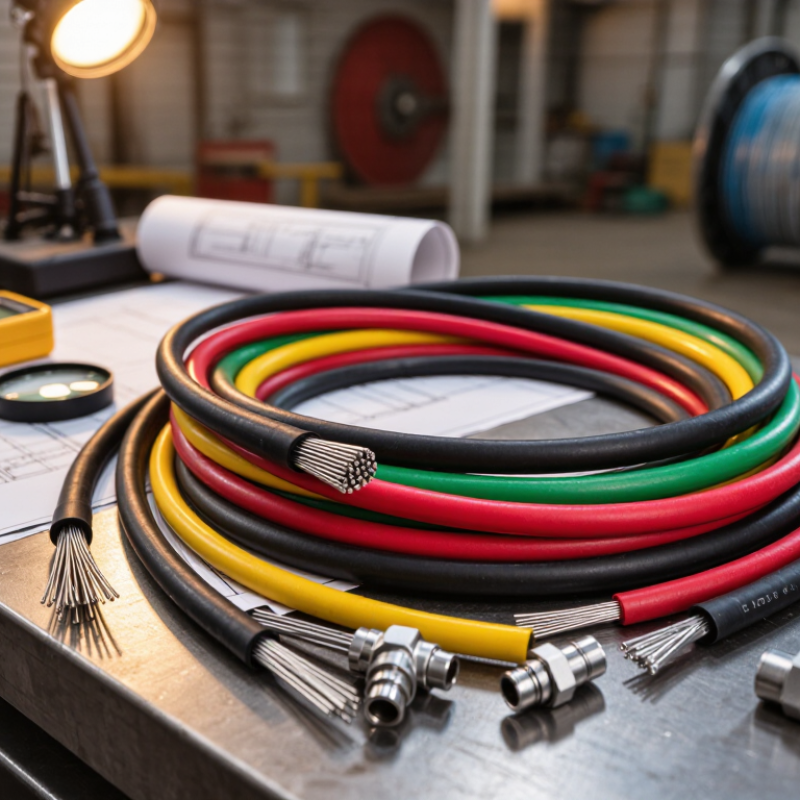
Marine wiring carries power, signals, and control commands through spaces exposed to moisture, vibration, and salt. The right cable depends on its job. Battery cables need low resistance and suitable current capacity; control cables often contain several insulated conductors, while coaxial or twisted-pair cables carry communications. Flexible cable helps where engines and equipment move. Small details matter.
Stranded copper is common because it tolerates repeated bending. Tinned copper adds a coating that can slow corrosion on strand surfaces, but it cannot compensate for a poor connection. Insulation must suit the environment: cross-linked polyethylene may handle heat and abrasion demands, while PVC is used in some less demanding runs. Check temperature, voltage, oil, flame, and water-resistance ratings on the datasheet. Fit matters, too.
Size conductors for current, run length, and acceptable voltage drop—not current alone. A long run to a bilge pump can lose voltage even when the cable looks substantial. Protect wiring from sharp edges, and separate power and sensitive signal cables where appropriate. For overseas orders, request clear construction details and test records. Specifications can look reassuring; actual routes are often less tidy than the drawing. Verify cable markings and test the finished circuit.
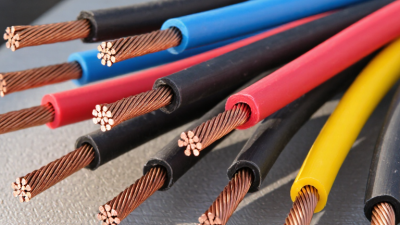
Nominal DC resistance of copper conductors at 20°C, in ohms per 1,000 feet. Higher AWG numbers indicate thinner wire and greater resistance. Use the applicable marine wiring standard and installation conditions to select wire size; actual stranded or tinned marine wire values may vary.
Marine wire selection starts with the vessel’s installation requirements, not a “marine grade” label. The IEC 60092 series covers electrical installations on ships, while IEC 60332 addresses flame propagation. Smoke and halogen-acid gas tests may also matter, depending on the project specification. Requirements can differ by vessel type, flag, and classification society. Check the exact standard and edition requested.
Look closely at the cable itself. Tinned copper conductors can help resist corrosion, while insulation must suit the circuit’s voltage, temperature, oil exposure, and routing conditions. A cable near an engine needs different checks from one inside a dry control cabinet. Inspect test reports, conductor size, temperature rating, and traceability documents before approving a shipment. Small print matters. “Marine” alone proves little.
For global orders, ask suppliers to identify the applicable standards and provide evidence for the finished cable, not just raw materials. Confirm markings remain legible and match the documents. Samples can reveal stiff jackets or poor printing, but they cannot replace formal testing. Even experienced buyers can miss a mismatch between a vessel specification and a supplier’s certificate; reviewing both together is worth the extra time.
Evaluating marine wire suppliers in China starts with the cable’s intended service, not the catalogue. Specify voltage, conductor material, operating temperature, installation method, and exposure to oil, moisture, salt spray, or vibration. Then request test reports for the exact construction offered. Check conductor resistance, insulation dimensions, ageing performance, and water-blocking results where applicable. The IEC 60092 series provides marine electrical installation requirements; confirm which parts apply to your vessel and cable type. Paper certificates alone are not enough.
Capacity matters, but so does repeatability. GWEC’s Global Offshore Wind Report 2024 recorded 10.8 GW of new offshore wind installations in 2023, bringing global cumulative capacity to 75.2 GW. That growth raises the stakes for dependable cable supply, though offshore wind figures do not prove a particular supplier’s quality. Ask for batch traceability, raw-material records, production inspection procedures, and recent third-party test reports. During an audit, look closely at conductor stranding, extrusion controls, and how rejected material is handled. Small process gaps can become expensive later.
Request samples from the same production line and batch planned for your order. Compare markings, dimensions, and test results against the approved specification. Confirm packaging, storage conditions, lead times, and change-control procedures in writing. Useful details. A polished factory tour can still hide weak documentation, and I would not treat one successful sample as proof of long-term consistency. The evaluation should leave a clear record of what was checked, what remains uncertain, and who will verify it before shipment.
Use this checklist to compare suppliers against your vessel, installation, destination-market, and project requirements. Standards and approvals depend on the cable type and intended application; verify the applicable edition and scope for each order.
| Evaluation dimension | What to evaluate | Evidence to request or check | Buyer decision |
|---|---|---|---|
| Product specification fit | Confirm conductor material and class, conductor size, rated voltage, core count, insulation, sheath, operating temperature, and installation conditions match the project specification. | Request a clause-by-clause compliance schedule, technical datasheet, construction drawing, and sample marking. Check conductor details against the specified requirements and relevant editions of applicable standards, such as IEC 60228 where specified. | Record each requirement as compliant, deviation, or unverified. |
| Marine-standard compliance | Check that the cable design and tests align with the marine standards named in the purchase specification. The IEC 60092 series covers electrical installations in ships, with different parts addressing different subjects and cable types. | Ask for test reports that identify the exact cable construction, test method, standard and edition, laboratory, test date, and result. Confirm that the reported scope matches the product being quoted. | Do not treat a general standards statement as product-specific proof. |
| Classification-society approval | Determine whether the vessel, flag, owner, or project requires approval by a classification society, and whether approval applies to the exact cable type and manufacturing site. | Request the approval certificate and its annex or product schedule. Check the validity period, model or construction coverage, factory location, and any conditions or limitations directly with the issuing organization. | Approval is project-dependent; verify scope rather than relying on a logo or claim. |
| Fire performance | Distinguish flame-retardant performance from circuit integrity during fire. These are different properties and require the specific test performance stated in the project requirements. | For flame spread, check the specified test, such as an applicable IEC 60332 series test. If fire resistance is required, request the relevant circuit-integrity test report, such as an applicable IEC 60331 test, and verify its scope and conditions. | A flame-retardant claim alone does not establish fire-resistant circuit integrity. |
| Smoke and halogen properties | Where required, check smoke emission and halogen-acid gas or acidity/corrosivity performance separately. Requirements may vary by vessel specification and installation area. | Request applicable test reports, for example to IEC 61034 for smoke measurement and IEC 60754 for halogen-acid gas or acidity/corrosivity tests, where these standards are specified. | Match the test method and acceptance criteria to the purchase specification. |
| Quality management and production control | Assess whether documented controls cover incoming materials, conductor processing, insulation and sheathing, in-process checks, final testing, nonconformities, and corrective actions. | Review the quality-management-system certificate, its validity and certified site scope, plus inspection and test plans, sample production records, and corrective-action procedures. ISO 9001 certification concerns a management system; it is not, by itself, product approval. | Assess certificate scope and real production records together. |
| Testing and traceability | Confirm that routine and required type tests are defined, results are recorded, and delivered cable can be traced to its production batch and material records. | Request a test matrix, sample routine-test report, batch or drum identification example, material certificates where specified, and a documented method for linking records to shipment labels. | Agree before order which reports and traceability records must ship with the goods. |
| Manufacturing capability | Verify that the quoted factory can produce the requested cable construction, size range, lengths, markings, and packaging. Confirm whether production is performed at the stated site or subcontracted. | Request a factory profile, process flow, equipment and test-equipment list, production-site details, and a sample label or drum specification. Consider a remote or on-site audit for higher-risk or critical orders. | Separate the trading contact from the actual manufacturing and inspection locations. |
| Commercial terms and delivery | Compare quoted specification, quantity basis, production lead time, order quantity constraints, packaging, delivery terms, payment terms, and quotation validity on a like-for-like basis. | Obtain a written quotation with Incoterms® rule and named place, shipment schedule, cable-length tolerances, packaging details, and a process for handling short lengths or claims. | Treat commercial figures as order-specific, not universal supplier benchmarks. |
| Export documentation and communication | Check the supplier can prepare accurate shipment and product documents for the destination and support technical clarification across time zones. | Agree on the required commercial invoice, packing list, certificate of origin if applicable, test documentation, shipping marks, and document review process before dispatch. | Confirm destination-specific import and project requirements with the relevant parties. |
| Warranty and after-sales support | Review how the supplier handles nonconforming goods, technical questions, investigation, replacement or other remedies, and warranty exclusions. | Request written warranty terms, claim time limits, required evidence, response process, and the party responsible for inspection and logistics in the event of a claim. | Ensure contractual remedies are clear before placing the order. |
Note: Standards references above are examples for evaluation, not a declaration that every marine cable must meet every listed standard. Confirm the applicable requirements with the vessel specification, project engineer, buyer, and relevant approval authority.
Chinese marine wire manufacturers generally fall into several product groups. Shipboard power-cable producers supply larger conductors for propulsion, generators, and distribution panels. Control and instrumentation specialists make multi-core cables, often with shielding to limit electrical interference. Communication suppliers focus on twisted-pair, coaxial, or fiber-optic products for onboard networks. Some manufacturers also offer flexible, fire-resistant, or low-smoke cable designs. These categories overlap, so a catalog label alone may not reveal whether a product suits a specific installation.
Demand has a broad maritime context. UNCTAD’s Review of Maritime Transport 2024 reports about 112,500 commercial ships of 100 gross tons or more in January 2024. That figure is not a measure of cable demand, but it shows the scale of the installed fleet. Buyers comparing suppliers should check conductor material, voltage and temperature ratings, shielding, bend radius, and test documentation. Type approval from a relevant classification society may also be required for the intended vessel and application. Details matter.
Tip: Request a datasheet and a sample coil. Check the cable’s markings and minimum bending radius against the installation drawing. A small mismatch can complicate routing in a crowded panel or narrow cable tray. Supplier categories are useful, but technical fit still needs careful review.
For global buyers, marine wire procurement should begin with evidence, not a polished catalogue. UNCTAD’s Review of Maritime Transport 2024 notes that more than 80% of world trade by volume moves by sea, making dependable shipboard cables operationally important. Ask suppliers for factory location, production-lot traceability, conductor specifications, and test records. Verify that certificates match the offered cable construction and applicable IEC 60092 requirements; a certificate alone does not prove every batch is consistent.
Sampling should be agreed before purchase. Request a sample from normal production, not a specially prepared display piece, and record its lot number and dimensions. An independent laboratory accredited to ISO/IEC 17025 can test relevant properties, such as conductor resistance, insulation thickness, and flame performance.
Small details matter. Compare the sample results with the production documents and purchase specification before approving shipment. For international procurement, clarify packing, delivery terms, inspection access, and how nonconforming goods will be handled. A checklist can still miss things; that is why buyers should keep room for a second review, especially when drawings or test reports use unfamiliar terminology.